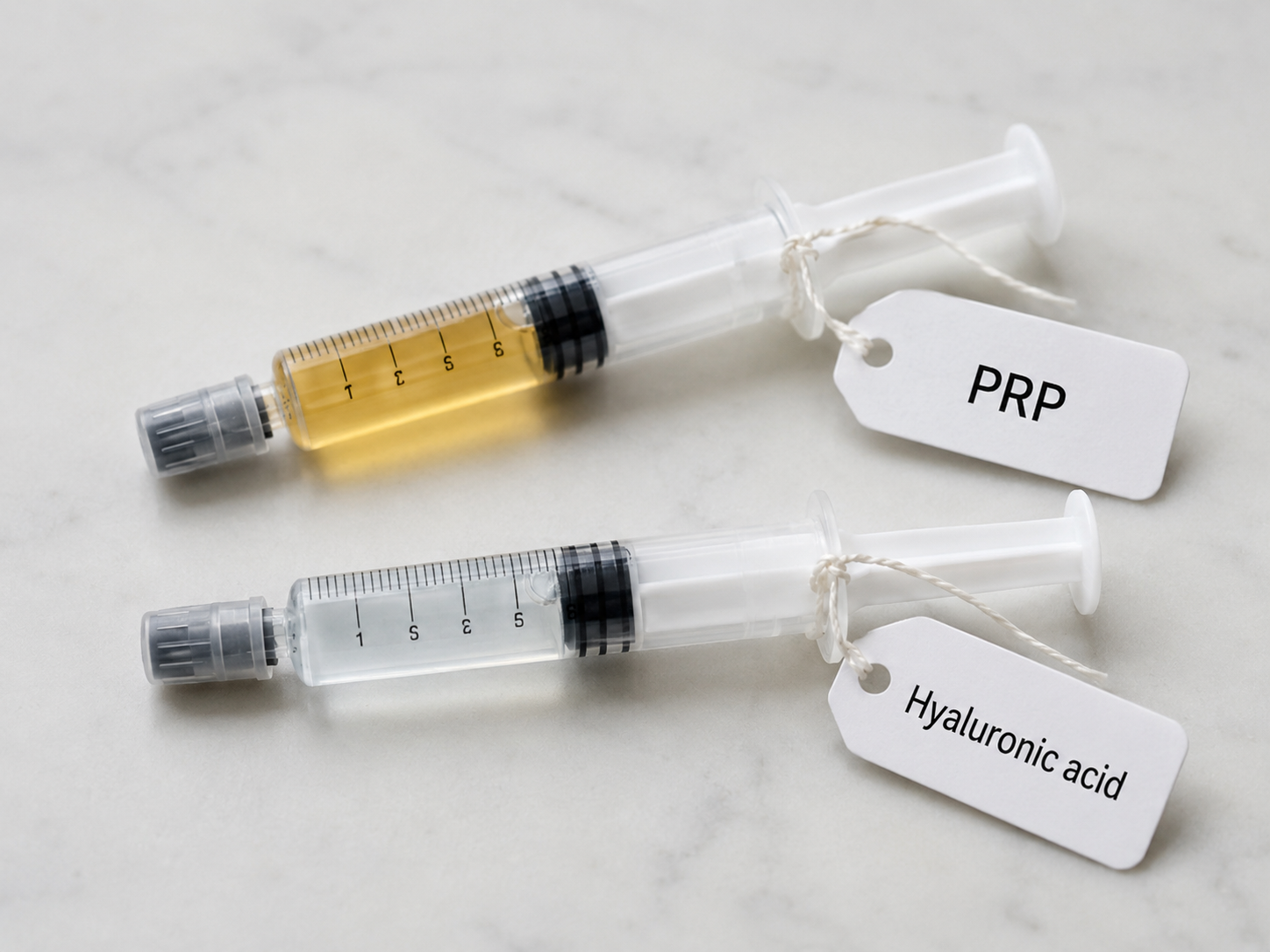
When knee arthritis pain persists despite exercise, weight management and simple medication, two injection options are often discussed: PRP (platelet-rich plasma) and hyaluronic acid (viscosupplementation). They are frequently presented as rivals, but they work in different ways and neither is a cure. This page compares them honestly so you can have a clear conversation about which — if either — suits your knee.
The headline is this: both are options to consider after the basics, both aim only at temporary symptom relief, and the evidence for both is mixed and not standardised. Choosing between them is less about one being universally 'better' and more about matching the option to your situation.
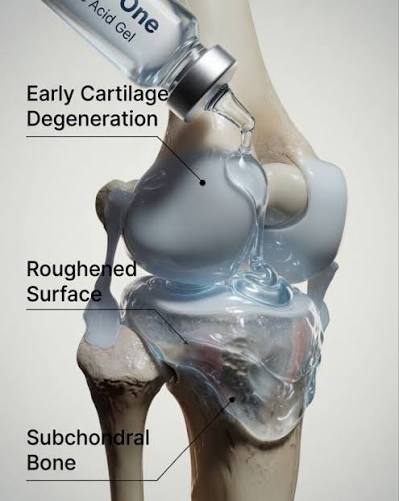
Both injections are considered for the same broad situation: mild-to-moderate knee osteoarthritis with ongoing pain despite core treatment. The features that make injections worth discussing include:
For advanced, bone-on-bone arthritis, neither injection is likely to help much, and the discussion usually shifts to knee replacement.
The two work on different aspects of the arthritic joint:
Neither addresses the root problem — lost cartilage. Both aim to make the joint more comfortable for a period. This shared limitation is as important as their differences.
Choosing between injections is an elective, unhurried decision — see a doctor to discuss it when core treatment has not been enough. Seek prompt care instead, not an injection, for red flags: a hot, red, swollen knee with fever, sudden inability to bear weight, or a rapidly worsening joint. And be cautious of any clinic that pushes a particular injection hard or promises cartilage regrowth — that is a reason for a second opinion, not a booking.
At VinayakM, the comparison is made specific to you:
The outcome is a recommendation tailored to your knee — including, sometimes, the advice that neither injection is worth it yet.
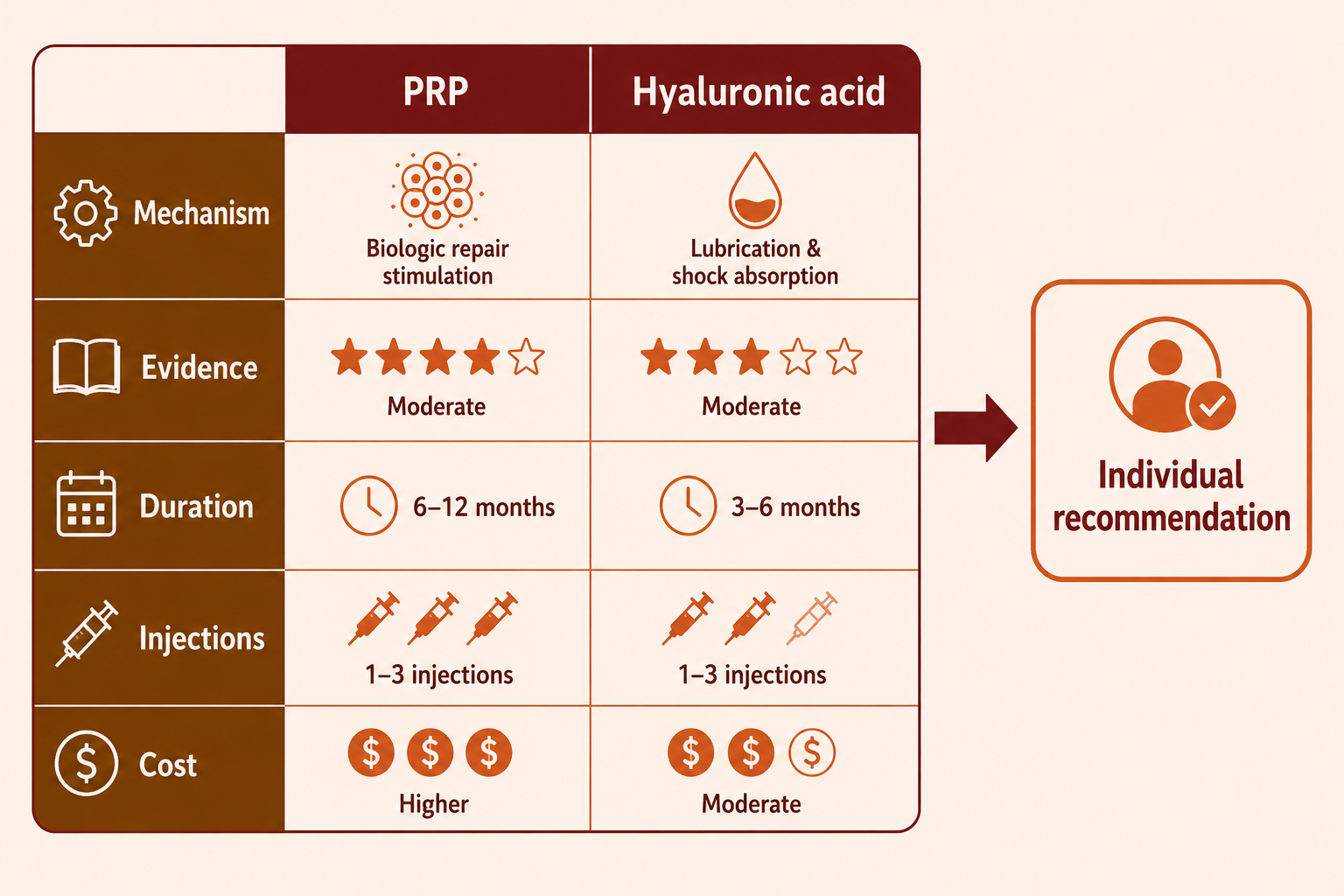
Side-by-side, honestly:
How they work — Hyaluronic acid restores lubrication/cushioning of the joint fluid; PRP delivers concentrated growth factors to modulate inflammation and repair.
Evidence in mild-to-moderate knee OA — Both can reduce pain in selected patients; several studies and reviews suggest PRP may provide greater or longer-lasting relief than hyaluronic acid, though findings are inconsistent and preparations are not standardised. Neither is strongly endorsed for routine use by all guidelines, and NICE does not recommend either as a routine part of osteoarthritis care.
Onset and duration — Both tend to build over weeks rather than working instantly; when they help, relief may last some months and can be repeated.
Source and reactions — PRP is from your own blood, so no allergic reaction to the material; hyaluronic acid is a manufactured preparation, generally well tolerated.
Number of injections — Hyaluronic acid may be a single injection or a short weekly course depending on the product; PRP protocols vary.
Cost — Both are usually self-funded; PRP often costs more because of the preparation involved.
Advanced arthritis — Neither is likely to help; consider surgery.
The bottom line: for earlier arthritis where an injection is reasonable, PRP is often the option with somewhat more supportive recent evidence, but this is not certain, and hyaluronic acid remains a sensible choice for many. Neither replaces exercise and weight management, and neither is a cure. Corticosteroid injections are a third option for short-term flare relief.
At VinayakM in Greater Kailash-1, Dr Udit Vinayak (trauma, sports medicine and joint replacement surgeon) helps you choose without a sales agenda:
If surgery is the more sensible route for your stage, we will say so rather than sell you an injection.
Whichever injection you might consider, the durable protection of your knee comes from the same habits:

Neither is universally better. For mild-to-moderate knee osteoarthritis, several studies suggest PRP may give greater or longer-lasting pain relief than hyaluronic acid, but the evidence is inconsistent and preparations are not standardised. The right choice depends on your stage, what you have tried, cost and goals — and for some people, neither is worthwhile yet.
They are usually used as alternatives rather than together, and combining them is not routinely recommended outside specific situations. If one has not helped, the more important question is often whether an injection is the right route at all, or whether to focus on exercise, weight management, or — in advanced arthritis — surgery.
When they work, both tend to give relief lasting some months and can be repeated. Some evidence suggests PRP may last somewhat longer than hyaluronic acid in earlier arthritis, but responses vary widely between individuals, so duration cannot be promised for either.
Both are usually self-funded. PRP often costs more because it involves drawing your blood and processing it in a centrifuge. Cost, alongside the realistic chance of benefit for your stage, is a legitimate part of the decision, and we are transparent about it.
No. Neither PRP nor hyaluronic acid cures arthritis or regrows cartilage. At best they provide temporary symptom relief in selected patients with earlier arthritis. Durable improvement comes from strengthening, staying active and managing weight, and for advanced disease the effective option is surgery.

.svg)