Osteoporosis & Low Bone Density: Signs, Risks & Treatment

Quick answer
Osteoporosis is a condition in which bones lose density and strength, making them fragile and prone to fracture — often with no symptoms until a bone breaks, typically at the hip, spine or wrist. It is diagnosed with a bone-density (DEXA) scan and is more common in women after menopause and in older adults. It is very treatable: with exercise, adequate calcium, protein and vitamin D, fall prevention and, where needed, bone-protecting medicines. VinayakM in Greater Kailash-1 assesses risk, arranges testing, and builds a fracture-prevention plan.
Last reviewed:
July 5, 2026
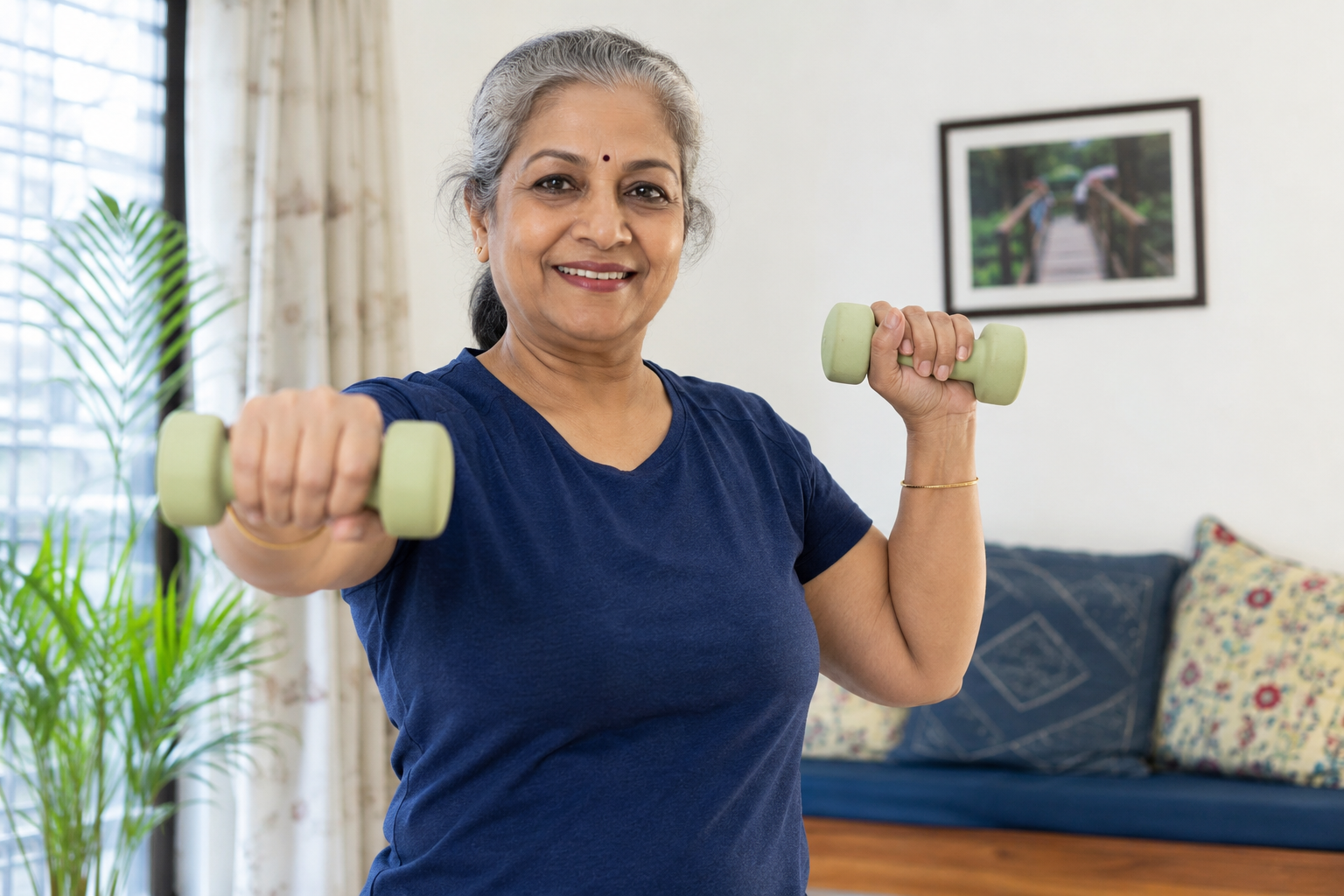
An older woman exercising with light hand weights, illustrating active management of osteoporosis.

Overview

Osteoporosis means 'porous bone'. The internal honeycomb structure of bone becomes thinner and its holes larger, so the bone is lighter and much weaker, breaking under forces that healthy bone would withstand. A milder degree of low bone density is called osteopenia.

The crucial feature of osteoporosis is that it is usually silent. Bone is lost gradually over years without pain or outward sign, and the first evidence is often a fracture — a broken wrist after a stumble, a hip fracture after a fall, or a spinal fracture that causes back pain and loss of height. Because these fractures, particularly of the hip, can seriously affect independence and health in later life, the whole point of managing osteoporosis is to find and treat it before the first fracture — or to prevent the next one.
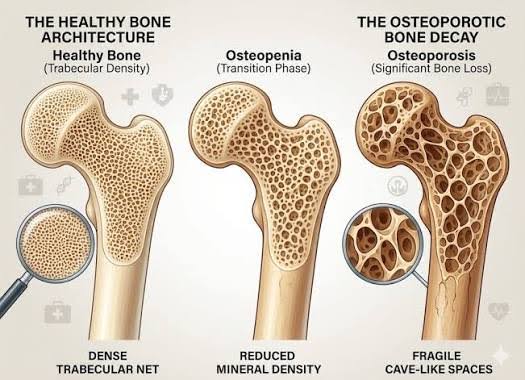
Diagram comparing the internal honeycomb structure of healthy bone with the thinned, porous structure of osteoporotic bone.

Symptoms & signs

Osteoporosis itself causes no symptoms in its early stages. Signs appear only once bone has weakened significantly or a fracture occurs:

  • A fracture after a minor fall or knock — the classic presentation, often wrist, hip or spine.
  • Loss of height over time.
  • A stooped upper back (sometimes called a dowager's hump).
  • Back pain from a spinal compression fracture, which can happen with little or no injury — for example, on bending or lifting.

Because it is silent until then, waiting for symptoms is the wrong strategy. Identifying risk and testing bone density is how osteoporosis is caught in time.

Causes & risk factors

Osteoporosis develops when bone loss outpaces bone formation. Contributing factors include:

  • Age — bone density declines with age in everyone.
  • Menopause — the fall in oestrogen accelerates bone loss in women, making postmenopausal women the largest at-risk group.
  • Low peak bone mass — less bone built in youth means less to lose.
  • Nutritional factors — long-standing low calcium, low protein, and vitamin D deficiency (very common in India).
  • Inactivity — bone weakens without weight-bearing loading.
  • Smoking and excess alcohol.
  • Certain medicines — especially long-term oral steroids.
  • Medical conditions — such as overactive thyroid or parathyroid, early menopause, some hormonal, digestive and inflammatory conditions.
  • Low body weight and a family history of osteoporosis or hip fracture.

Many people have several factors at once; some are modifiable, which is where prevention and treatment focus.

When to see a doctor

See a doctor to be assessed for osteoporosis if you:

  • Have broken a bone after a minor fall or low-impact injury.
  • Are a woman past menopause or a man over about 50 with risk factors.
  • Have lost height or developed a stooped posture.
  • Take long-term steroids or have a condition that weakens bone.
  • Have a family history of osteoporosis or hip fracture, or an early menopause.

Seek prompt care for sudden severe back pain (especially in older adults, as it may be a spinal fracture), or any suspected fracture after a fall — pain, deformity or inability to use the limb.

How it's diagnosed

At VinayakM, diagnosing and quantifying osteoporosis involves:

  1. Risk assessment — your history, previous fractures, family history, menopause status, medicines and lifestyle. Tools such as fracture-risk calculators may be used.
  2. DEXA bone-density scan — a quick, low-radiation scan (usually of the hip and spine) that measures bone mineral density. Results are given as a T-score: around −1 and above is normal, between −1 and −2.5 is osteopenia, and −2.5 or below indicates osteoporosis.
  3. Blood tests — calcium, vitamin D, kidney and thyroid function, and tests to identify treatable underlying causes.
  4. Imaging — X-rays if a fracture is suspected.

Diagnosis is not just labelling low density but estimating fracture risk, because that is what treatment aims to reduce.

Treatment options

Osteoporosis is very treatable, and treatment combines lifestyle measures with medicines where risk warrants them.

1. Foundation for everyone (see bone health):

  • Weight-bearing and resistance exercise, tailored to be safe for fragile bone.
  • Adequate calcium and protein, ideally from diet (see diet for bone health).
  • Correcting vitamin D deficiency — important and often needed in India, guided by blood levels.
  • Stopping smoking and limiting alcohol.
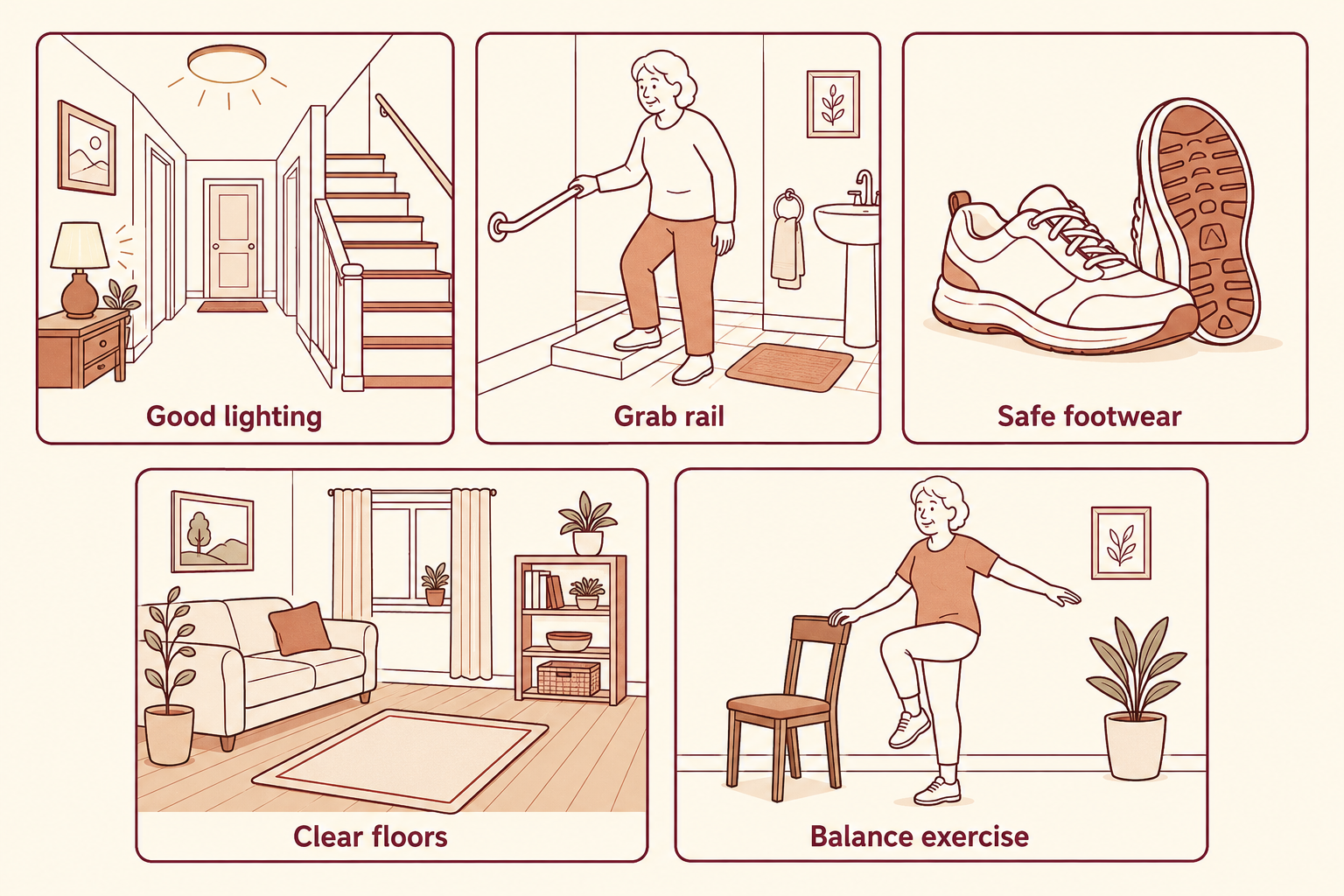
  • Fall prevention — balance work, safe footwear, home lighting, vision and medication review — because most osteoporotic fractures follow a fall.

2. Bone-protecting medicines — considered when bone density and fracture risk are high enough:

  • Bisphosphonates (oral weekly/monthly, or an annual infusion) are usually first-line; they slow bone loss.
  • Denosumab, an injection every six months, is another option.
  • Bone-building agents such as teriparatide are used for severe osteoporosis or when other treatments are unsuitable — see teriparatide.
  • Hormone-related treatments in specific situations.

The choice depends on your risk, other health conditions and preferences, and treatment is reviewed over time.

3. Treat underlying causes — such as thyroid disease or steroid use, in partnership with your other doctors.

With the right plan, fracture risk can be substantially reduced.

How VinayakM helps

At VinayakM in Greater Kailash-1, osteoporosis care is led by Dr Udit Vinayak (trauma, sports medicine and joint replacement surgeon) — and treating and preventing fractures is core to that work, so osteoporosis is taken seriously rather than as an incidental finding. We provide:

  • Risk assessment, DEXA scanning and blood tests — including vitamin D and causes screening.
  • A fracture-prevention plan combining safe exercise, nutrition (with our dietician), vitamin D correction and, where indicated, bone-protecting medicines.
  • Fall-prevention advice — often the most immediately protective step in older adults.
  • Coordination with your other doctors for underlying conditions and medicines.

Where a fracture has already happened, we manage it and put prevention in place so it is less likely to recur.
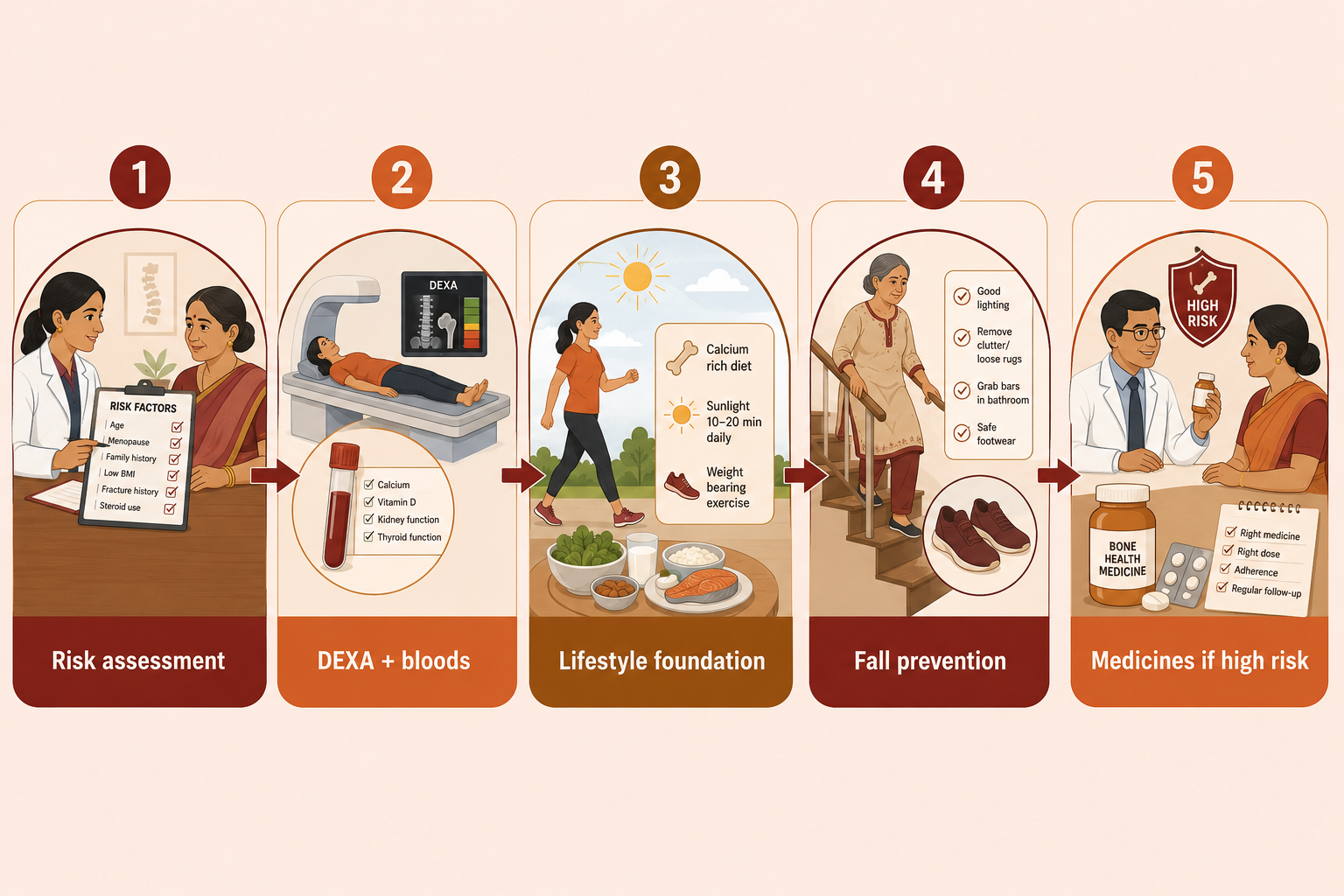
Osteoporosis care pathway: risk assessment, DEXA and blood tests, lifestyle foundation, fall prevention and bone-protecting medicines when needed.

Prevention & self-care

Preventing osteoporosis — or slowing it — uses the same levers as treatment, started earlier:
  • Build peak bone mass young through active, well-nourished childhoods and teens.
  • Keep loading your bones lifelong — weight-bearing activity and strength training twice weekly.
  • Eat for your bones — adequate calcium and protein (see diet for bone health).
  • Fix vitamin D — test and correct deficiency, which is widespread in India.
  • Don't smoke; limit alcohol.
  • Prevent falls as you age — balance exercises, safe footwear, good lighting and reviewing dizziness-causing medicines.
  • Know your risk — if you are postmenopausal or have risk factors, ask about a DEXA scan rather than waiting for a fracture.
Illustration of fall-prevention and bone-protection measures at home.

Frequently asked questions

What is the difference between osteoporosis and osteopenia?

Both describe lower-than-ideal bone density measured on a DEXA scan. Osteopenia is the milder reduction (T-score between −1 and −2.5) and osteoporosis is the more significant one (T-score −2.5 or below), with a higher fracture risk. Osteopenia is often managed with lifestyle measures and vitamin D, while osteoporosis more often also needs bone-protecting medicines.

How is osteoporosis diagnosed?

Mainly with a DEXA bone-density scan, a quick, low-radiation test of the hip and spine that gives a T-score. This is combined with a risk assessment and blood tests (including vitamin D and calcium) to find treatable causes. It is usually silent, so testing is based on risk factors rather than symptoms.

Is osteoporosis reversible?

It is very treatable even if not fully 'reversible'. Exercise, adequate calcium, protein and vitamin D, and bone-protecting or bone-building medicines can slow bone loss, modestly increase density and, most importantly, substantially reduce fracture risk. The goal of treatment is fewer fractures, not just a better scan number.

Who is most at risk of osteoporosis?

Postmenopausal women are the largest group, because the fall in oestrogen speeds bone loss. Others at higher risk include older adults, people on long-term steroids, those with vitamin D deficiency or low calcium and protein intake, smokers, and people with a family history of osteoporosis or hip fracture, low body weight or certain medical conditions.

Can I prevent osteoporosis with diet and exercise alone?

For many people, weight-bearing exercise, strength training, adequate calcium and protein, correcting vitamin D and avoiding smoking substantially protect bone and may prevent osteoporosis. If bone density is already low and fracture risk is high, these measures remain essential but medicines are often added. A clinician can advise based on your DEXA result and risk.
Related reading

References

  1. International Osteoporosis Foundation. About osteoporosis. — https://www.osteoporosis.foundation/patients/about-osteoporosis
  2. National Health Service (NHS). Osteoporosis. — https://www.nhs.uk/conditions/osteoporosis/
  3. National Institute for Health and Care Excellence (NICE). Osteoporosis: assessing the risk of fragility fracture. Clinical guideline CG146. — https://www.nice.org.uk/guidance/cg146
This page is for general information and education only. It is not a substitute for a consultation, diagnosis or treatment from a qualified clinician. If you have any of the red-flag symptoms above, seek medical care promptly.
{"@context":"https://schema.org","@graph":[{"@type":["MedicalClinic","LocalBusiness"],"@id":"https://www.vinayakm.in/#clinic","name":"VinayakM","url":"https://www.vinayakm.in","logo":"https://cdn.prod.website-files.com/6908cd2bb6a88638d8c0e611/6a494a210e7a3f8e0c33192a_vinayakm-name-logo.png","telephone":"+91 92171 75397","email":"info@vinayakm.in","address":{"@type":"PostalAddress","streetAddress":"3rd floor, B-23, Block B, N Block Market","addressLocality":"Greater Kailash-1, New Delhi","addressRegion":"Delhi","postalCode":"110048","addressCountry":"IN"},"geo":{"@type":"GeoCoordinates","latitude":28.556354,"longitude":77.2323718},"openingHours":["Mo-Tu 09:00-20:00","Th-Su 09:00-20:00"],"founder":{"@type":"Person","name":"Mani Sharma"},"sameAs":["https://maps.app.goo.gl/jPVPXKfH8qAUUDeo8"]},{"@type":"MedicalWebPage","@id":"https://www.vinayakm.in/orthopaedics/osteoporosis#webpage","url":"https://www.vinayakm.in/orthopaedics/osteoporosis","name":"Osteoporosis & Low Bone Density | VinayakM","description":"Osteoporosis weakens bones and raises fracture risk, often without symptoms until a break. Learn the risk factors, how it is diagnosed with DEXA, and how it is treated.","inLanguage":"en-IN","about":{"@type":"MedicalCondition","name":"Osteoporosis","alternateName":["Low bone density","Brittle bone disease","Osteopenia (when milder)"]},"author":{"@type":"Physician","name":"Dr Udit Vinayak","jobTitle":"Trauma, Sports Medicine & Joint Replacement Surgeon","url":"https://www.vinayakm.in/team/dr-udit-vinayak","medicalSpecialty":"Orthopedic"},"reviewedBy":{"@type":"Physician","name":"Dr Udit Vinayak","jobTitle":"Trauma, Sports Medicine & Joint Replacement Surgeon","url":"https://www.vinayakm.in/team/dr-udit-vinayak","medicalSpecialty":"Orthopedic"},"lastReviewed":"2026-07-05","dateModified":"2026-07-05","publisher":{"@id":"https://www.vinayakm.in/#clinic"},"medicalAudience":{"@type":"MedicalAudience","audienceType":"Patient"}},{"@type":"FAQPage","@id":"https://www.vinayakm.in/orthopaedics/osteoporosis#faq","mainEntity":[{"@type":"Question","name":"What is the difference between osteoporosis and osteopenia?","acceptedAnswer":{"@type":"Answer","text":"Both describe lower-than-ideal bone density measured on a DEXA scan. Osteopenia is the milder reduction (T-score between −1 and −2.5) and osteoporosis is the more significant one (T-score −2.5 or below), with a higher fracture risk. Osteopenia is often managed with lifestyle measures and vitamin D, while osteoporosis more often also needs bone-protecting medicines."}},{"@type":"Question","name":"How is osteoporosis diagnosed?","acceptedAnswer":{"@type":"Answer","text":"Mainly with a DEXA bone-density scan, a quick, low-radiation test of the hip and spine that gives a T-score. This is combined with a risk assessment and blood tests (including vitamin D and calcium) to find treatable causes. It is usually silent, so testing is based on risk factors rather than symptoms."}},{"@type":"Question","name":"Is osteoporosis reversible?","acceptedAnswer":{"@type":"Answer","text":"It is very treatable even if not fully 'reversible'. Exercise, adequate calcium, protein and vitamin D, and bone-protecting or bone-building medicines can slow bone loss, modestly increase density and, most importantly, substantially reduce fracture risk. The goal of treatment is fewer fractures, not just a better scan number."}},{"@type":"Question","name":"Who is most at risk of osteoporosis?","acceptedAnswer":{"@type":"Answer","text":"Postmenopausal women are the largest group, because the fall in oestrogen speeds bone loss. Others at higher risk include older adults, people on long-term steroids, those with vitamin D deficiency or low calcium and protein intake, smokers, and people with a family history of osteoporosis or hip fracture, low body weight or certain medical conditions."}},{"@type":"Question","name":"Can I prevent osteoporosis with diet and exercise alone?","acceptedAnswer":{"@type":"Answer","text":"For many people, weight-bearing exercise, strength training, adequate calcium and protein, correcting vitamin D and avoiding smoking substantially protect bone and may prevent osteoporosis. If bone density is already low and fracture risk is high, these measures remain essential but medicines are often added. A clinician can advise based on your DEXA result and risk."}}]},{"@type":"BreadcrumbList","@id":"https://www.vinayakm.in/orthopaedics/osteoporosis#breadcrumbs","itemListElement":[{"@type":"ListItem","position":1,"name":"Home","item":"https://www.vinayakm.in"},{"@type":"ListItem","position":2,"name":"Orthopaedics","item":"https://www.vinayakm.in/orthopaedics"},{"@type":"ListItem","position":3,"name":"Osteoporosis & Low Bone Density: Signs, Risks & Treatment","item":"https://www.vinayakm.in/orthopaedics/osteoporosis"}]}]}
WhatsApp