
Back Pain: Causes, Treatment & When to See a Doctor

Quick answer
Most back pain is mechanical — from muscles, ligaments, discs and joints — and improves within a few weeks with staying active, simple pain relief and avoiding prolonged bed rest, rather than needing scans or surgery. A smaller number of cases have warning features (such as leg weakness, bladder or bowel changes, or pain with fever or unexplained weight loss) that need urgent assessment. At VinayakM in Greater Kailash-1, back pain is assessed to rule out serious causes, reassure where appropriate, and guide recovery with an active, evidence-based plan.
Last reviewed:
July 5, 2026
An office worker standing to stretch their lower back beside a desk, illustrating staying active with back pain.

Overview

Back pain is one of the most common reasons people see a doctor, and one of the most misunderstood. The reassuring truth is that the great majority of back pain is 'mechanical' and not dangerous — it comes from the muscles, ligaments, discs and small joints of the spine, and it settles over days to weeks. Modern guidance has moved firmly away from bed rest and early scans towards staying active and confident, because that is what actually speeds recovery.

That said, a small proportion of back pain signals something that needs prompt attention. The practical skill — and the main job of assessment — is to separate ordinary mechanical back pain, which needs reassurance and activity, from the few cases that need urgent care or specific treatment. This page helps you understand both.
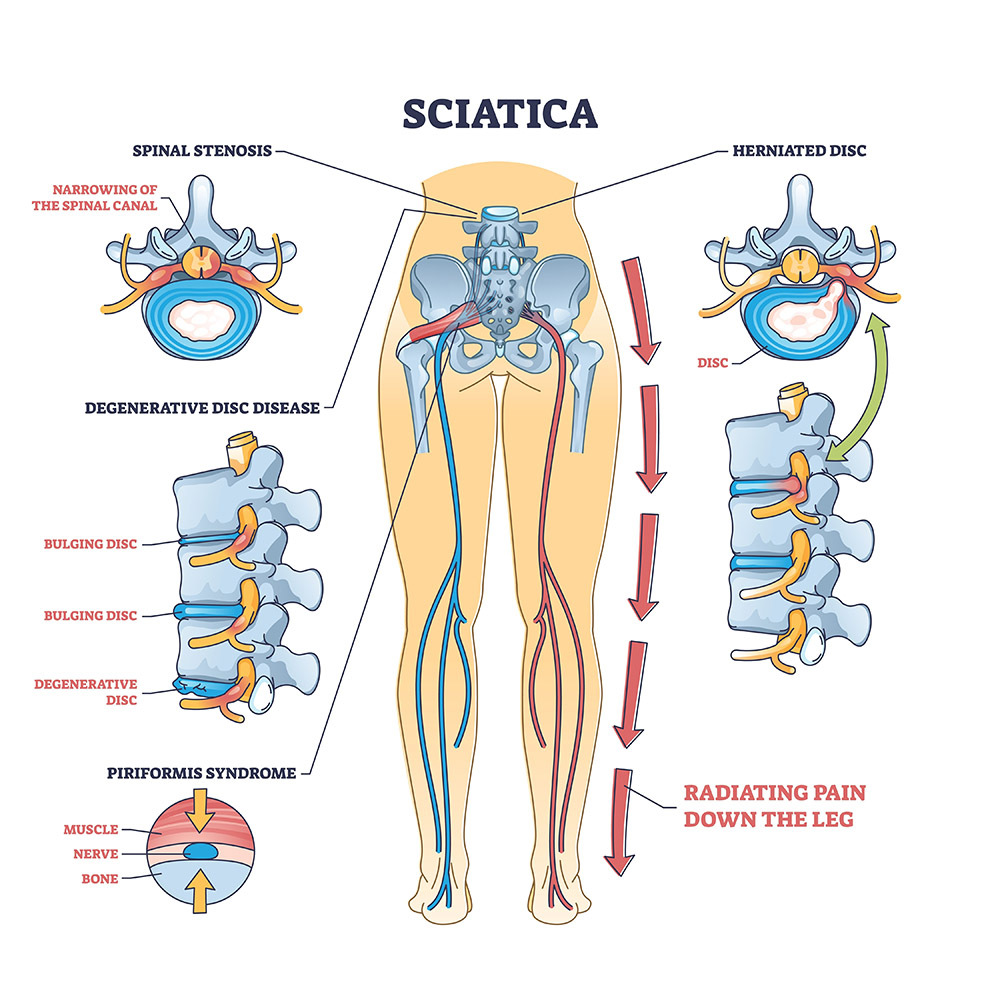
Labelled diagram of the lower spine showing vertebrae, discs, facet joints and a nerve root, with common sources of back pain.

Symptoms & signs

Ordinary mechanical back pain typically:

  • Comes on after bending, lifting, an awkward movement, or sometimes for no clear reason.
  • Is felt in the lower back, sometimes spreading to the buttock or thigh.
  • Is worse with certain movements or positions and eased by others.
  • Varies through the day and improves over days to a few weeks.

Related patterns include:

  • Sciatica — pain travelling down the leg, sometimes with tingling or numbness, from irritation of a nerve (often a disc pressing on it). Most sciatica also improves over weeks.
  • Stiffness in the morning that eases with movement.

The features that matter most, though, are the warning signs in the next section — they change the urgency completely.

Causes & risk factors

Common causes of back pain include:

  • Muscle or ligament strain — the commonest, from lifting, twisting, poor posture or sudden movements.
  • Disc problems — a bulging or herniated (slipped) disc can press on a nerve and cause sciatica.
  • Age-related wear — degenerative changes in the discs and facet joints (spinal osteoarthritis), increasingly common with age.
  • Poor conditioning and prolonged sitting — weak core and back muscles and long hours seated, common with desk and screen work.
  • Osteoporotic spinal fractures — in older adults with weak bones, sometimes with little injury (see osteoporosis).
  • Less common but important causes — infection, inflammation (such as ankylosing spondylitis), or, rarely, tumours — which is why the warning signs matter.

Stress, poor sleep and low mood also genuinely influence how back pain is experienced and how quickly it settles.

When to see a doctor

Seek urgent/emergency care if back pain comes with any of these red flags:

  • Loss of bladder or bowel control, or numbness around the back passage, genitals or inner thighs (saddle anaesthesia) — this can indicate cauda equina syndrome, a surgical emergency.
  • Progressive weakness or numbness in the legs, or difficulty walking.
  • Back pain with fever, chills or feeling very unwell — possible infection.
  • Pain after significant trauma (fall or accident).
  • Unexplained weight loss, a history of cancer, or pain that is constant, severe and worse at night.
  • New severe back pain in someone over about 50 with osteoporosis risk — possible spinal fracture.

Without red flags, see a doctor routinely if pain is severe, is not improving after a few weeks, or keeps recurring and limiting your life.

How it's diagnosed

At VinayakM, back pain assessment is guided by ruling out the serious and reassuring the common:

  1. History — how it started, where it is, whether it travels to the leg, what eases and worsens it, and specifically a check for red-flag symptoms.
  2. Examination — movement, areas of tenderness, nerve function in the legs (power, sensation, reflexes) and relevant tests.
  3. Imaging — used selectively. For typical mechanical back pain without red flags, X-rays and MRI are not needed early, because scans often show age-related changes that are not the cause of pain and can lead to unnecessary worry and treatment. Imaging is arranged when red flags are present, when there is significant or progressive nerve involvement, or when pain persists and a specific treatable cause is suspected.

The aim is a confident, safe diagnosis — usually 'mechanical back pain' — and a clear plan, not a scan for its own sake.

Treatment options

For most (mechanical, non-red-flag) back pain, treatment is active and reassuring:

1. Stay active.

  • Keep moving and continue normal activities as much as pain allows — prolonged bed rest slows recovery. Gentle activity and a gradual return to normal are the core of getting better.

2. Simple pain relief.

  • Anti-inflammatory gels or short courses of painkillers on medical advice to help you keep moving. Strong opioids are avoided.

3. Exercise and physiotherapy.

  • Exercise is the best-supported treatment for persistent and recurrent back pain — a mix of strengthening (especially the core and back), stretching and general fitness. A physiotherapist can guide this, and address posture and work setup.

4. Address the whole picture.

  • Sleep, stress and confidence matter; understanding that hurt does not equal harm helps recovery.

5. For sciatica — most improves with the above over weeks; persistent or severe nerve compression may need further assessment and, occasionally, injections or surgery.

6. When more is needed — persistent pain with a clear structural cause, or significant nerve involvement, may lead to specialist investigation, targeted injections, or surgery in a minority. Surgery is for specific problems (such as significant nerve compression), not for ordinary back pain.

See spine health for keeping the back well between episodes.

How VinayakM helps

At VinayakM in Greater Kailash-1, back pain is assessed by Dr Udit Vinayak (trauma, sports medicine and joint replacement surgeon), with a focus on safe reassurance and active recovery rather than over-investigation:

  • A careful check for red flags so serious causes are not missed, and honest reassurance when the pain is mechanical.
  • Selective imaging — we avoid scans that would only reveal harmless age-related changes and cause needless worry.
  • An active recovery plan — staying mobile, appropriate pain relief and a physiotherapy-led exercise programme, with attention to posture and work setup.
  • Escalation only when warranted — specialist investigation, injections or surgical opinion for the minority with significant nerve compression or a specific structural cause.

The goal is a confident return to normal life and fewer recurrences.
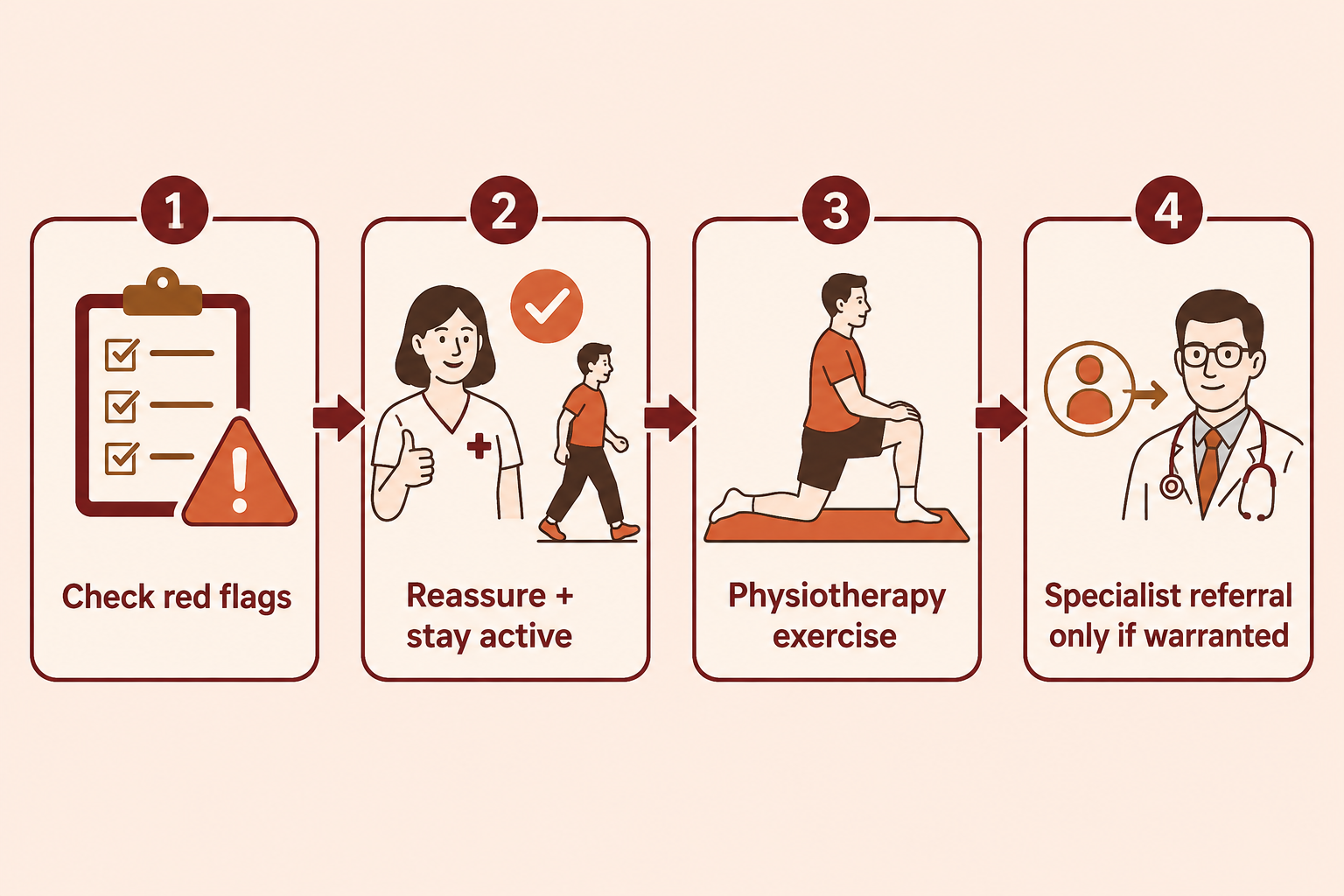
Back pain pathway: check for red flags, reassure and stay active for mechanical pain, physiotherapy-led exercise, and specialist referral only when warranted.

Prevention & self-care

Back pain often recurs, but the risk and severity can be reduced:

  • Keep active and strong — regular activity plus core and back strengthening are the best protection (see spine health).
  • Move often — break up long periods of sitting; adjust your desk and screen setup.
  • Lift sensibly — bend the knees, keep the load close, avoid twisting under load.
  • Maintain a healthy weight and don't smoke (smoking is linked to more back pain and slower disc health).
  • Mind sleep and stress — both influence pain; a supportive mattress and good sleep help.
  • Stay confident — fear and avoidance prolong back pain; keeping gently active during a flare speeds recovery.
Illustration of back-care habits: safe lifting, moving often, core exercises and good desk setup.

Frequently asked questions

Should I rest or stay active with back pain?

Stay as active as the pain allows. Prolonged bed rest actually slows recovery and weakens the muscles that support your back. Keeping gently moving, continuing normal activities where possible, and using simple pain relief to help you do so is the modern, evidence-based approach for ordinary mechanical back pain.

Do I need an MRI for my back pain?

Usually not, at least early on. For typical back pain without warning signs, scans often reveal age-related changes that are not the cause of pain and can lead to unnecessary worry and treatment. MRI is reserved for red-flag symptoms, significant or progressive nerve problems, or pain that persists with a suspected specific cause.

What are the warning signs that back pain is serious?

Seek urgent care for loss of bladder or bowel control, numbness around the back passage or inner thighs, progressive leg weakness, back pain with fever or feeling very unwell, pain after major injury, or pain with unexplained weight loss or a history of cancer. New severe back pain in an older person with osteoporosis risk also needs assessment.

How long does back pain usually last?

Most mechanical back pain improves substantially within a few weeks, though it can recur. Staying active, using simple pain relief and, for persistent or recurrent pain, doing a physiotherapy-guided exercise programme give the best chance of a full and lasting recovery. Pain not improving after a few weeks is worth reviewing.

Is surgery needed for a slipped disc?

Usually not. Most slipped (herniated) discs and the sciatica they cause improve over weeks with activity, pain relief and physiotherapy. Surgery is considered for a minority — mainly significant or progressive nerve compression, or pain that does not settle despite proper non-surgical treatment — and never as a first step for ordinary back pain.

Related reading

References

  1. National Institute for Health and Care Excellence (NICE). Low back pain and sciatica in over 16s: assessment and management. NICE guideline NG59. — https://www.nice.org.uk/guidance/ng59
  2. National Health Service (NHS). Back pain. — https://www.nhs.uk/conditions/back-pain/
  3. American Academy of Orthopaedic Surgeons — OrthoInfo. Low back pain. — https://orthoinfo.aaos.org/en/diseases--conditions/low-back-pain/
This page is for general information and education only. It is not a substitute for a consultation, diagnosis or treatment from a qualified clinician. If you have any of the red-flag symptoms above, seek medical care promptly.
{"@context":"https://schema.org","@graph":[{"@type":["MedicalClinic","LocalBusiness"],"@id":"https://www.vinayakm.in/#clinic","name":"VinayakM","url":"https://www.vinayakm.in","logo":"https://cdn.prod.website-files.com/6908cd2bb6a88638d8c0e611/6a494a210e7a3f8e0c33192a_vinayakm-name-logo.png","telephone":"+91 92171 75397","email":"info@vinayakm.in","address":{"@type":"PostalAddress","streetAddress":"3rd floor, B-23, Block B, N Block Market","addressLocality":"Greater Kailash-1, New Delhi","addressRegion":"Delhi","postalCode":"110048","addressCountry":"IN"},"geo":{"@type":"GeoCoordinates","latitude":28.556354,"longitude":77.2323718},"openingHours":["Mo-Tu 09:00-20:00","Th-Su 09:00-20:00"],"founder":{"@type":"Person","name":"Mani Sharma"},"sameAs":["https://maps.app.goo.gl/jPVPXKfH8qAUUDeo8"]},{"@type":"MedicalWebPage","@id":"https://www.vinayakm.in/orthopaedics/back-pain#webpage","url":"https://www.vinayakm.in/orthopaedics/back-pain","name":"Back Pain: Causes & When to See a Doctor | VinayakM","description":"Most back pain is mechanical and improves with movement and time. Learn the common causes, the red flags that need urgent care, and how back pain is treated in GK-1, South Delhi.","inLanguage":"en-IN","about":{"@type":"MedicalCondition","name":"Back pain","alternateName":["Low back pain","Backache","Lower back pain"]},"author":{"@type":"Physician","name":"Dr Udit Vinayak","jobTitle":"Trauma, Sports Medicine & Joint Replacement Surgeon","url":"https://www.vinayakm.in/team/dr-udit-vinayak","medicalSpecialty":"Orthopedic"},"reviewedBy":{"@type":"Physician","name":"Dr Udit Vinayak","jobTitle":"Trauma, Sports Medicine & Joint Replacement Surgeon","url":"https://www.vinayakm.in/team/dr-udit-vinayak","medicalSpecialty":"Orthopedic"},"lastReviewed":"2026-07-05","dateModified":"2026-07-05","publisher":{"@id":"https://www.vinayakm.in/#clinic"},"medicalAudience":{"@type":"MedicalAudience","audienceType":"Patient"}},{"@type":"FAQPage","@id":"https://www.vinayakm.in/orthopaedics/back-pain#faq","mainEntity":[{"@type":"Question","name":"Should I rest or stay active with back pain?","acceptedAnswer":{"@type":"Answer","text":"Stay as active as the pain allows. Prolonged bed rest actually slows recovery and weakens the muscles that support your back. Keeping gently moving, continuing normal activities where possible, and using simple pain relief to help you do so is the modern, evidence-based approach for ordinary mechanical back pain."}},{"@type":"Question","name":"Do I need an MRI for my back pain?","acceptedAnswer":{"@type":"Answer","text":"Usually not, at least early on. For typical back pain without warning signs, scans often reveal age-related changes that are not the cause of pain and can lead to unnecessary worry and treatment. MRI is reserved for red-flag symptoms, significant or progressive nerve problems, or pain that persists with a suspected specific cause."}},{"@type":"Question","name":"What are the warning signs that back pain is serious?","acceptedAnswer":{"@type":"Answer","text":"Seek urgent care for loss of bladder or bowel control, numbness around the back passage or inner thighs, progressive leg weakness, back pain with fever or feeling very unwell, pain after major injury, or pain with unexplained weight loss or a history of cancer. New severe back pain in an older person with osteoporosis risk also needs assessment."}},{"@type":"Question","name":"How long does back pain usually last?","acceptedAnswer":{"@type":"Answer","text":"Most mechanical back pain improves substantially within a few weeks, though it can recur. Staying active, using simple pain relief and, for persistent or recurrent pain, doing a physiotherapy-guided exercise programme give the best chance of a full and lasting recovery. Pain not improving after a few weeks is worth reviewing."}},{"@type":"Question","name":"Is surgery needed for a slipped disc?","acceptedAnswer":{"@type":"Answer","text":"Usually not. Most slipped (herniated) discs and the sciatica they cause improve over weeks with activity, pain relief and physiotherapy. Surgery is considered for a minority — mainly significant or progressive nerve compression, or pain that does not settle despite proper non-surgical treatment — and never as a first step for ordinary back pain."}}]},{"@type":"BreadcrumbList","@id":"https://www.vinayakm.in/orthopaedics/back-pain#breadcrumbs","itemListElement":[{"@type":"ListItem","position":1,"name":"Home","item":"https://www.vinayakm.in"},{"@type":"ListItem","position":2,"name":"Orthopaedics","item":"https://www.vinayakm.in/orthopaedics"},{"@type":"ListItem","position":3,"name":"Back Pain: Causes, Treatment & When to See a Doctor","item":"https://www.vinayakm.in/orthopaedics/back-pain"}]}]}
WhatsApp