Foot & Heel Pain (Plantar Fasciitis): Causes & Treatment

Quick answer
Plantar fasciitis is the most common cause of heel pain: inflammation and strain of the plantar fascia, the thick band along the sole, causing sharp pain under the heel that is classically worst with the first steps in the morning. It usually improves with calf and foot stretches, supportive footwear, activity modification and time, though recovery can take several months. Persistent or unusual heel pain should be assessed to confirm the cause. At VinayakM in Greater Kailash-1, heel pain is diagnosed and managed with an evidence-based, mostly non-surgical plan.
Last reviewed:
July 5, 2026
A person sitting on the edge of a bed holding their heel on first standing in the morning.

Overview

The plantar fascia is a strong, fibrous band that runs along the sole of the foot from the heel bone to the toes, supporting the arch and absorbing load as you walk. Plantar fasciitis is irritation and degeneration of this band, usually where it attaches to the heel — and it is by far the commonest cause of pain under the heel.

The hallmark is sharp heel pain with the first few steps after getting out of bed or standing up after rest, which often eases a little as you get moving and then returns after prolonged standing or walking. It is common, sometimes stubborn, and can take several months to settle — but the great majority of people recover with simple, consistent self-care and do not need injections or surgery. Knowing what to do, and doing it consistently, is what matters most.
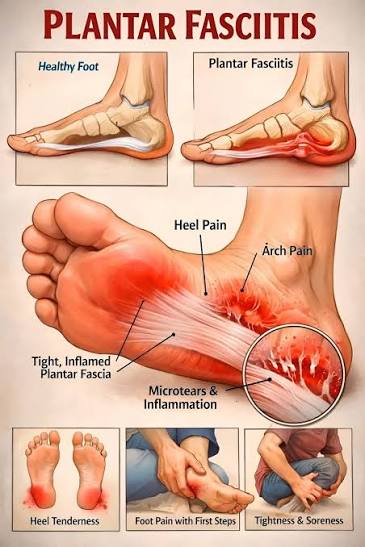
Diagram of the sole of the foot showing the plantar fascia running from the heel to the toes, with the site of plantar fasciitis pain.

Symptoms & signs

Typical features of plantar fasciitis:

  • Sharp or stabbing pain under the heel, sometimes spreading into the arch.
  • Worst with the first steps in the morning or after sitting, easing after a few minutes of walking.
  • Returns after long periods of standing or walking, or towards the end of the day.
  • Tenderness when pressing the inner part of the heel.
  • Often one foot, though it can affect both.

Features that suggest a different cause of heel pain — and so warrant assessment — include pain that is constant, present at rest or at night, associated with numbness or tingling, following a specific injury, or accompanied by a hot, swollen or red heel.

Causes & risk factors

Plantar fasciitis develops from repeated strain on the fascia. Contributing factors include:

  • A sudden increase in activity — more walking, running or standing than the foot is used to.
  • Tight calf muscles and Achilles tendon, which increase strain on the fascia.
  • Prolonged standing, especially on hard floors — relevant to many jobs.
  • Unsupportive footwear — flat, worn or thin-soled shoes.
  • Excess body weight, which increases load on the heel.
  • Foot shape — very flat or very high arches.
  • Age — most common in adults in mid-life.

Often several factors combine — for example, more walking in poor footwear on hard surfaces. A heel spur is sometimes seen on X-ray, but spurs are common and usually not the cause of the pain, so they rarely need treatment in their own right.

When to see a doctor

See a doctor about heel pain if:

  • It is not improving after a few weeks of self-care, or is getting worse.
  • The pain is severe, or significantly limits standing and walking.
  • There are features suggesting another cause — pain that is constant or present at night, numbness or tingling in the foot, or heel pain after a specific injury (a fall onto the heel can fracture it).
  • The heel is hot, red or swollen, or you feel unwell — possible inflammation or infection.
  • You have diabetes or poor circulation and any foot problem, which needs timely, careful attention.

Most plantar fasciitis does not need urgent care, but the above features mean the diagnosis should be confirmed rather than assumed.

How it's diagnosed

At VinayakM, heel pain is usually diagnosed clinically:

  1. History — the classic first-step morning pain, activity changes, footwear, standing time and general health.
  2. Examination — the point of maximal tenderness (typically the inner heel), calf and Achilles tightness, foot shape and arch, and a check for signs pointing to other causes.
  3. Imaging — usually not needed. Plantar fasciitis is a clinical diagnosis. X-rays are used if a fracture or other bony cause is suspected (not to look for a heel spur, which is usually irrelevant); ultrasound or MRI occasionally, for persistent or atypical cases.
  4. Further tests if an inflammatory condition or nerve problem is suspected.

The main purpose of assessment is to confirm plantar fasciitis and exclude the less common but important other causes of heel pain.

Treatment options

Plantar fasciitis is treated non-surgically in the great majority of cases. Consistency over weeks to months is the key.

1. Stretching (the cornerstone):

  • Calf stretches and plantar fascia-specific stretches (for example, pulling the toes back to stretch the sole), done regularly, are the best-supported treatment.

2. Footwear and support:

  • Supportive, cushioned shoes with a slight heel; avoid flat, worn or thin-soled footwear and walking barefoot on hard floors.
  • Heel cushions or arch-supporting insoles (off-the-shelf are often enough).

3. Load management:

  • Reduce aggravating activity temporarily (long standing, high-impact exercise) and return gradually; substitute low-impact activity such as cycling or swimming.
  • Manage weight where relevant to reduce heel load.

4. Symptom relief:

  • Ice after activity; short courses of anti-inflammatory measures on medical advice.
  • A night splint can help stubborn cases by keeping the fascia stretched overnight.

5. If it persists:

  • Physiotherapy with progressive loading; occasionally corticosteroid injection for persistent pain (used cautiously, as repeated injections carry risks including fascia rupture); other measures such as shockwave therapy in selected cases.

6. Surgery — very rarely needed, only for a small number with severe, long-standing pain that has failed thorough non-surgical treatment.

Most people recover with the first few measures applied patiently and consistently.

How VinayakM helps

At VinayakM in Greater Kailash-1, heel and foot pain is assessed by Dr Udit Vinayak (trauma, sports medicine and joint replacement surgeon), starting with an accurate diagnosis and a realistic, non-surgical plan:

  • Confirming plantar fasciitis clinically and excluding the less common causes of heel pain, using imaging only when genuinely indicated (not to chase an irrelevant heel spur).
  • A structured self-care plan — the calf and plantar-fascia stretches that work, footwear and insole advice, and activity modification — with physiotherapy for persistent cases.
  • Weight support via our dietician where load is a factor.
  • Considered use of injections only when appropriate, with honest counselling about the limited role and the risks of repeated steroid injections.

We set expectations honestly: plantar fasciitis can take months, but consistent treatment resolves it for most people without surgery.
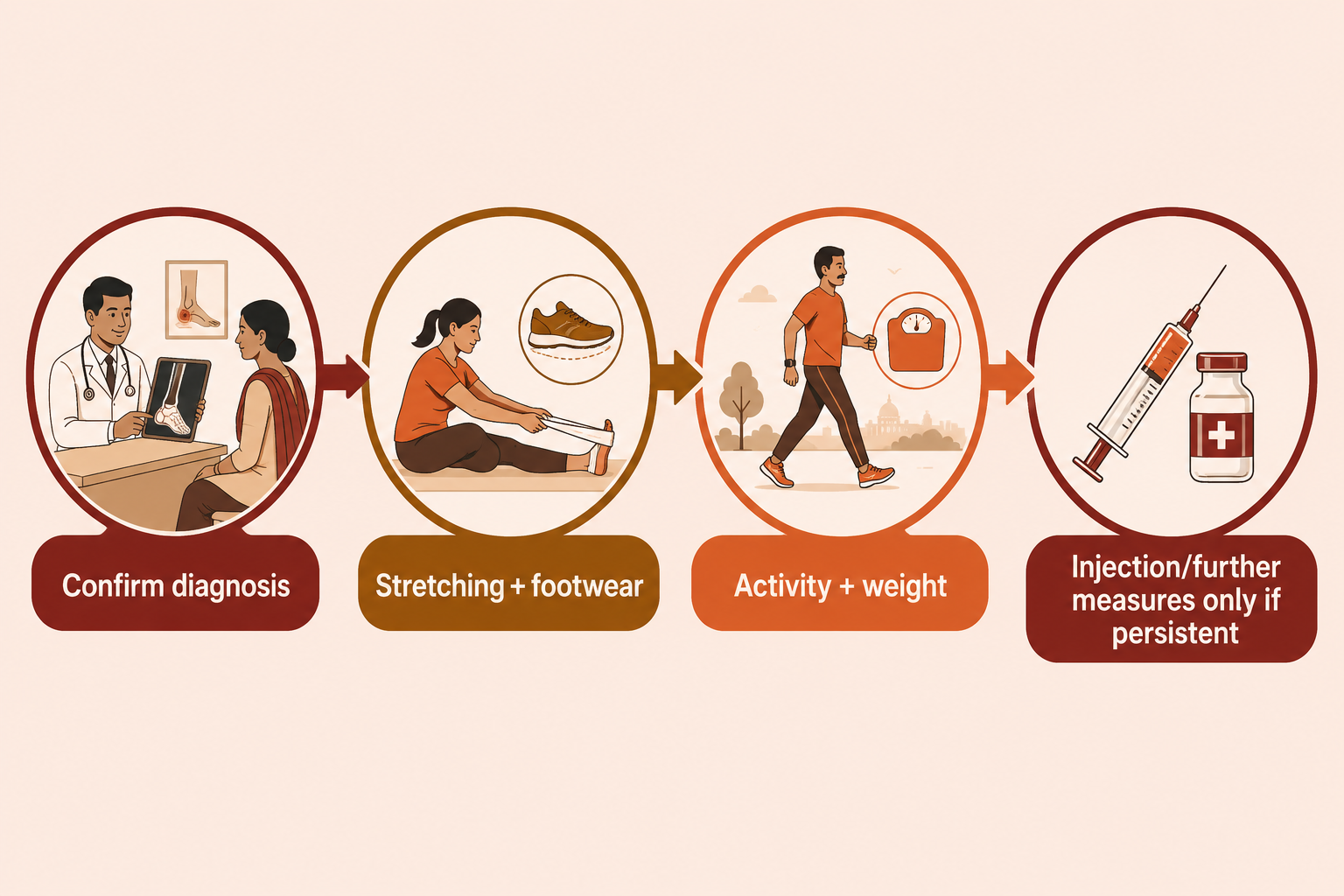
Heel pain pathway: confirm the diagnosis, stretching and footwear, activity and weight management, then injections or further measures only if persistent.

Prevention & self-care

To prevent heel pain, or stop it returning:

  • Keep the calves and plantar fascia flexible — regular calf and foot stretches, especially if you stand a lot or are increasing activity.
  • Wear supportive, cushioned footwear for standing and walking; replace worn shoes, and avoid long spells barefoot on hard floors.
  • Increase activity gradually — sudden jumps in walking or running are a common trigger.
  • Maintain a healthy weight to reduce heel load.
  • Vary the surface and impact of your exercise rather than repeating heavy standing or running daily.
  • Address early heel niggles with stretches and footwear before they become established.
Illustration of plantar fasciitis exercises: calf stretch, plantar fascia stretch and rolling the sole on a ball.

Frequently asked questions

Why does my heel hurt most with the first steps in the morning?

During rest the plantar fascia tightens, and the first steps suddenly stretch and load the irritated tissue, causing the classic sharp first-step pain. It often eases after a few minutes of walking as the tissue warms and stretches, then can return after prolonged standing. This morning pattern is a hallmark of plantar fasciitis.

How long does plantar fasciitis take to get better?

It can be slow — often weeks to several months — but the great majority of people recover with consistent non-surgical care. Regular calf and plantar-fascia stretching, supportive footwear, activity modification and patience are what resolve it. Because it is stubborn, sticking with the plan even once it starts improving matters.

Do I need a scan or treatment for a heel spur?

Usually not. Heel spurs are common, are often seen in people without any pain, and are generally not the cause of plantar fasciitis. Treatment targets the fascia, not the spur. X-rays are used to check for other causes such as a fracture, not to look for a spur that would not change the plan.

What footwear is best for plantar fasciitis?

Supportive, cushioned shoes with a slight heel and good arch support are best; avoid flat, thin-soled or worn-out shoes and walking barefoot on hard floors. Heel cushions or off-the-shelf arch-supporting insoles often help. Getting footwear right is one of the most effective and simplest parts of treatment.

Are steroid injections a good treatment for heel pain?

A corticosteroid injection can help persistent plantar fasciitis, but it is used cautiously and is not a first step. Repeated injections carry risks, including thinning of the heel fat pad and, rarely, rupture of the plantar fascia. Stretching, footwear and activity changes are tried first, and injections are reserved for stubborn cases after careful discussion.

Related reading

References

  1. American Academy of Orthopaedic Surgeons — OrthoInfo. Plantar fasciitis and bone spurs. — https://orthoinfo.aaos.org/en/diseases--conditions/plantar-fasciitis-and-bone-spurs/
  2. National Health Service (NHS). Heel pain and plantar fasciitis. — https://www.nhs.uk/conditions/plantar-fasciitis/
  3. National Institute for Health and Care Excellence (NICE). Clinical Knowledge Summaries: Plantar fasciitis. — https://cks.nice.org.uk/topics/plantar-fasciitis/
This page is for general information and education only. It is not a substitute for a consultation, diagnosis or treatment from a qualified clinician. If you have any of the red-flag symptoms above, seek medical care promptly.
{"@context":"https://schema.org","@graph":[{"@type":["MedicalClinic","LocalBusiness"],"@id":"https://www.vinayakm.in/#clinic","name":"VinayakM","url":"https://www.vinayakm.in","logo":"https://cdn.prod.website-files.com/6908cd2bb6a88638d8c0e611/6a494a210e7a3f8e0c33192a_vinayakm-name-logo.png","telephone":"+91 92171 75397","email":"info@vinayakm.in","address":{"@type":"PostalAddress","streetAddress":"3rd floor, B-23, Block B, N Block Market","addressLocality":"Greater Kailash-1, New Delhi","addressRegion":"Delhi","postalCode":"110048","addressCountry":"IN"},"geo":{"@type":"GeoCoordinates","latitude":28.556354,"longitude":77.2323718},"openingHours":["Mo-Tu 09:00-20:00","Th-Su 09:00-20:00"],"founder":{"@type":"Person","name":"Mani Sharma"},"sameAs":["https://maps.app.goo.gl/jPVPXKfH8qAUUDeo8"]},{"@type":"MedicalWebPage","@id":"https://www.vinayakm.in/orthopaedics/foot-pain-plantar-fasciitis#webpage","url":"https://www.vinayakm.in/orthopaedics/foot-pain-plantar-fasciitis","name":"Heel Pain & Plantar Fasciitis: Causes & Treatment | VinayakM","description":"Plantar fasciitis is the commonest cause of heel pain — sharp first-step pain in the morning. Learn what causes it, self-care that works, and when to see a doctor.","inLanguage":"en-IN","about":{"@type":"MedicalCondition","name":"Plantar fasciitis","alternateName":["Heel pain","Plantar heel pain","Policeman's heel"]},"author":{"@type":"Physician","name":"Dr Udit Vinayak","jobTitle":"Trauma, Sports Medicine & Joint Replacement Surgeon","url":"https://www.vinayakm.in/team/dr-udit-vinayak","medicalSpecialty":"Orthopedic"},"reviewedBy":{"@type":"Physician","name":"Dr Udit Vinayak","jobTitle":"Trauma, Sports Medicine & Joint Replacement Surgeon","url":"https://www.vinayakm.in/team/dr-udit-vinayak","medicalSpecialty":"Orthopedic"},"lastReviewed":"2026-07-05","dateModified":"2026-07-05","publisher":{"@id":"https://www.vinayakm.in/#clinic"},"medicalAudience":{"@type":"MedicalAudience","audienceType":"Patient"}},{"@type":"FAQPage","@id":"https://www.vinayakm.in/orthopaedics/foot-pain-plantar-fasciitis#faq","mainEntity":[{"@type":"Question","name":"Why does my heel hurt most with the first steps in the morning?","acceptedAnswer":{"@type":"Answer","text":"During rest the plantar fascia tightens, and the first steps suddenly stretch and load the irritated tissue, causing the classic sharp first-step pain. It often eases after a few minutes of walking as the tissue warms and stretches, then can return after prolonged standing. This morning pattern is a hallmark of plantar fasciitis."}},{"@type":"Question","name":"How long does plantar fasciitis take to get better?","acceptedAnswer":{"@type":"Answer","text":"It can be slow — often weeks to several months — but the great majority of people recover with consistent non-surgical care. Regular calf and plantar-fascia stretching, supportive footwear, activity modification and patience are what resolve it. Because it is stubborn, sticking with the plan even once it starts improving matters."}},{"@type":"Question","name":"Do I need a scan or treatment for a heel spur?","acceptedAnswer":{"@type":"Answer","text":"Usually not. Heel spurs are common, are often seen in people without any pain, and are generally not the cause of plantar fasciitis. Treatment targets the fascia, not the spur. X-rays are used to check for other causes such as a fracture, not to look for a spur that would not change the plan."}},{"@type":"Question","name":"What footwear is best for plantar fasciitis?","acceptedAnswer":{"@type":"Answer","text":"Supportive, cushioned shoes with a slight heel and good arch support are best; avoid flat, thin-soled or worn-out shoes and walking barefoot on hard floors. Heel cushions or off-the-shelf arch-supporting insoles often help. Getting footwear right is one of the most effective and simplest parts of treatment."}},{"@type":"Question","name":"Are steroid injections a good treatment for heel pain?","acceptedAnswer":{"@type":"Answer","text":"A corticosteroid injection can help persistent plantar fasciitis, but it is used cautiously and is not a first step. Repeated injections carry risks, including thinning of the heel fat pad and, rarely, rupture of the plantar fascia. Stretching, footwear and activity changes are tried first, and injections are reserved for stubborn cases after careful discussion."}}]},{"@type":"BreadcrumbList","@id":"https://www.vinayakm.in/orthopaedics/foot-pain-plantar-fasciitis#breadcrumbs","itemListElement":[{"@type":"ListItem","position":1,"name":"Home","item":"https://www.vinayakm.in"},{"@type":"ListItem","position":2,"name":"Orthopaedics","item":"https://www.vinayakm.in/orthopaedics"},{"@type":"ListItem","position":3,"name":"Foot & Heel Pain (Plantar Fasciitis): Causes & Treatment","item":"https://www.vinayakm.in/orthopaedics/foot-pain-plantar-fasciitis"}]}]}
WhatsApp