How to Keep Your Bones Strong: Bone Health Explained

Quick answer
You keep your bones strong with weight-bearing and resistance exercise, enough calcium and protein in your diet, adequate vitamin D from sunlight and diet, and by avoiding smoking and excess alcohol. Bone is living tissue that responds to how you load and feed it: strength built in youth and preserved through adulthood protects against fractures and osteoporosis later. This guide from VinayakM in Greater Kailash-1 sets out what genuinely works — especially relevant given widespread vitamin D deficiency in India.
Last reviewed:
July 5, 2026
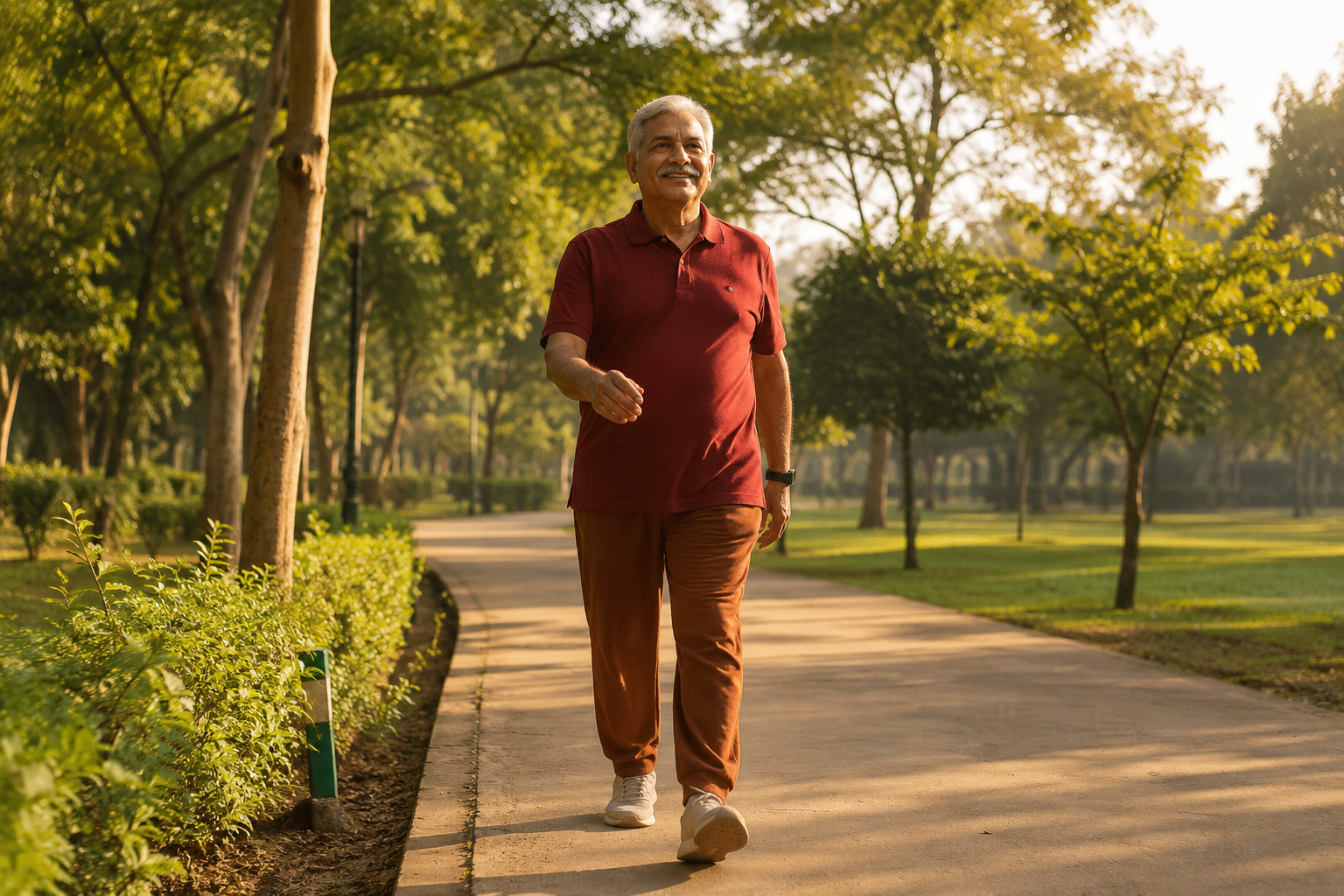
An older adult brisk-walking outdoors in sunlight, illustrating weight-bearing exercise and vitamin D for bone health.

Overview

Bone is not the inert scaffold it looks like — it is living, constantly renewing tissue. Throughout life, cells called osteoclasts remove old bone while osteoblasts lay down new bone. In childhood and early adulthood, formation outpaces removal and bones grow denser, reaching peak bone mass in the late twenties. After that, the balance gradually tips the other way, and bone is slowly lost — faster in women around menopause.

Two things follow. First, the stronger the bone bank you build early, the more you can afford to lose later before bones become fragile. Second, the habits that maintain bone — loading it and feeding it well — matter at every age, because you can slow, and partly offset, the natural loss. Looking after your bones is about protecting your future independence: strong bones are far less likely to fracture in a fall.

Diagram of bone remodelling showing dense healthy bone versus thinning bone, and the roles of calcium and vitamin D.

Symptoms & signs

Healthy bone loss is silent — there are no symptoms until a bone becomes fragile enough to break easily or to change shape. Warning signs that bone strength may already be compromised (i.e. towards osteoporosis) include:

  • A fracture from a minor fall or knock that should not have broken a bone.
  • Loss of height over the years, or a stooped upper back.
  • Back pain from a spinal compression fracture, sometimes with little or no injury.

Because the process is silent, the sensible approach is not to wait for symptoms but to build and protect bone throughout life, and to be assessed for bone density if you have risk factors.

Causes & risk factors

Bone strength is shaped by factors you can and cannot change.

Within your control:

  • Physical activity — bone strengthens in response to loading; a sedentary life weakens it.
  • Diet — inadequate calcium and protein limit the raw materials for bone.
  • Vitamin D — needed to absorb calcium; deficiency is very common in India despite the sunshine, because of indoor lifestyles, clothing cover, pollution and skin pigmentation.
  • Smoking and excess alcohol — both accelerate bone loss.
  • Very low body weight or excessive dieting — reduces bone density.

Outside your control:

  • Age — bone is gradually lost after peak mass.
  • Sex and menopause — women lose bone rapidly after menopause as oestrogen falls.
  • Family history and body frame.
  • Some medical conditions and medicines — such as long-term steroids, thyroid and hormonal disorders.

Most people have a mix; the modifiable factors are where the day-to-day work lies.

When to see a doctor

See a doctor to discuss your bone health and possible bone-density testing if you:

  • Have broken a bone from a minor fall or low-impact injury.
  • Are a postmenopausal woman, or a man over about 50, with risk factors.
  • Have lost height or developed a stooped posture.
  • Take long-term steroids or have a condition known to weaken bone.
  • Have a strong family history of osteoporosis or hip fracture.

Seek prompt care for sudden severe back pain, especially in an older person, as it may signal a spinal fracture; and for any fracture after a significant injury.

How it's diagnosed

You do not need tests to act on the general advice below. But where bone strength is a concern, assessment at VinayakM may include:

  1. Risk assessment — your history, fractures, family history, medicines and lifestyle.
  2. Bone density scan (DEXA) — a low-radiation scan that measures bone mineral density and estimates fracture risk; the standard test for diagnosing osteoporosis.
  3. Blood tests — including vitamin D and calcium levels, and tests to look for treatable causes of bone loss.

Testing is targeted to those with risk factors rather than done for everyone, and the results guide whether lifestyle measures alone are enough or whether specific treatment is needed.

Treatment options

For general bone health, the 'treatment' is a set of evidence-based habits; where osteoporosis is diagnosed, specific medicines are added (see osteoporosis).

1. Load your bones.

  • Weight-bearing exercise — brisk walking, jogging, dancing, stair-climbing; activity where your bones carry your weight.
  • Resistance/strength training — twice a week; muscles pulling on bone stimulate it to strengthen.
  • Balance work — to reduce falls, the event that turns weak bone into a fracture.

2. Feed your bones.

  • Calcium — from dairy (milk, curd, paneer), ragi, sesame (til), green leafy vegetables, and fortified foods; see diet for bone health.
  • Protein — adequate protein supports the bone matrix; important and often under-consumed.
  • Vitamin D — sensible sunlight exposure and diet; supplementation is often needed in India because deficiency is widespread, but doses should be guided by a clinician, ideally based on a blood level.

3. Remove what harms bone.

  • Stop smoking; keep alcohol within sensible limits.
  • Avoid crash dieting and very low body weight.

4. Treat underlying causes — correcting vitamin D deficiency, managing thyroid or hormonal conditions, and reviewing bone-affecting medicines with your doctor.

These steps apply lifelong; medicines for osteoporosis are added only when density and fracture risk warrant them.

How VinayakM helps

At VinayakM in Greater Kailash-1, bone health is addressed by Dr Udit Vinayak (trauma, sports medicine and joint replacement surgeon), whose day-to-day work with fractures makes fracture prevention a real priority rather than an afterthought. We offer:

  • Risk assessment and, where indicated, DEXA scanning and blood tests — including vitamin D, which is so often low here.
  • A practical plan combining weight-bearing and resistance exercise, with a physiotherapist where useful.
  • Nutrition support through our dietician, Dt. Karishma Saxena, for calcium- and protein-adequate eating suited to Indian diets (see diet for bone health).
  • Correction of vitamin D deficiency and, where osteoporosis is diagnosed, appropriate osteoporosis treatment.

The goal is straightforward: strong bones and, above all, fewer fractures as you age.
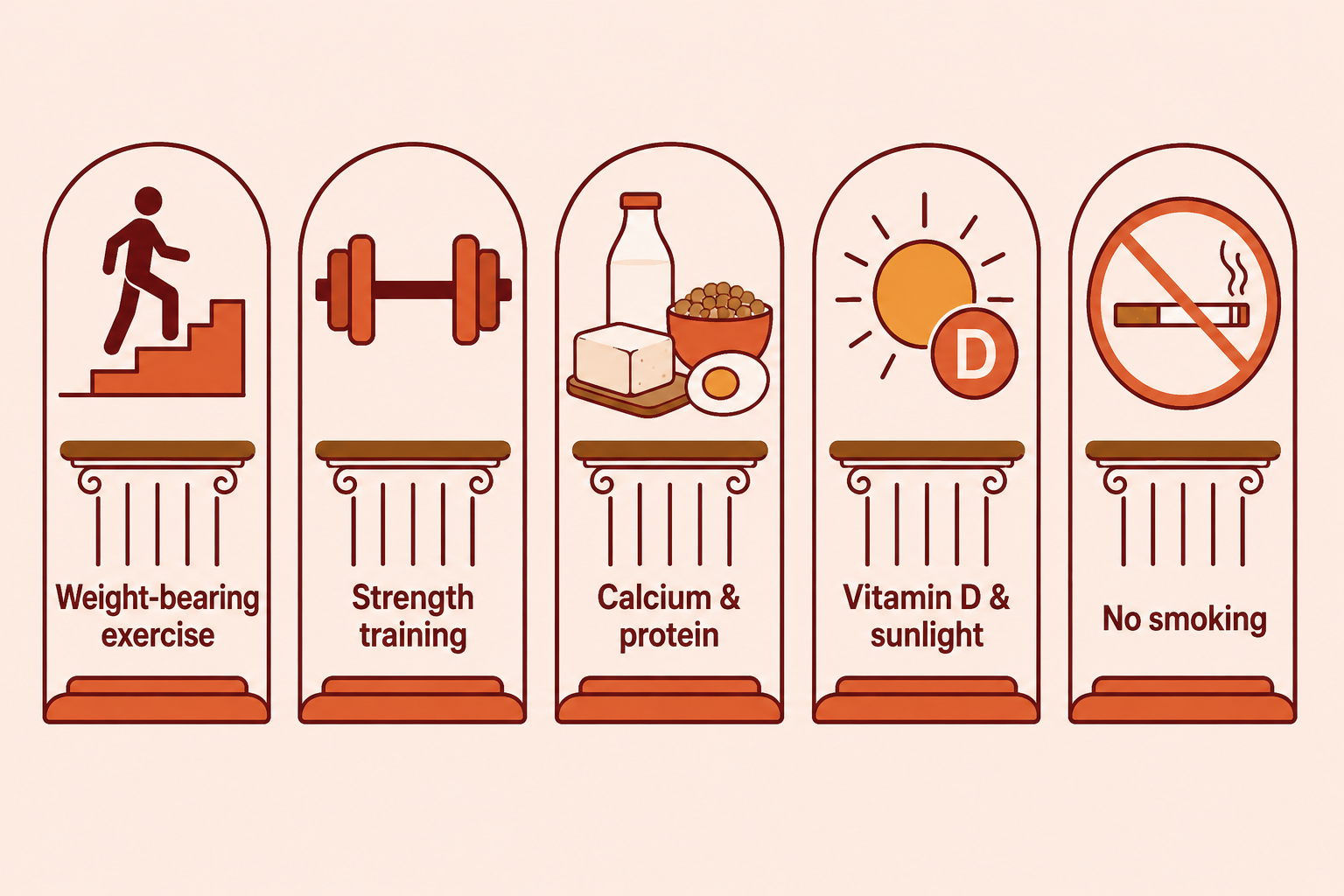
The pillars of bone health: weight-bearing and resistance exercise, calcium and protein, vitamin D, and avoiding smoking and excess alcohol.

Prevention & self-care

Prevention is the treatment for bone health — the same habits build bone early and protect it later:

  • Move against gravity. Weight-bearing activity (walking, stairs, dancing) plus strength training twice weekly are the strongest signals for bone to stay dense.
  • Get enough calcium and protein — build meals around dairy or calcium-rich Indian foods and adequate protein (see diet for bone health).
  • Sort out vitamin D — a little regular sunlight and, where needed, clinician-guided supplementation; deficiency is common in India even in sunny cities.
  • Don't smoke; limit alcohol.
  • Protect against falls — good lighting, safe footwear, balance exercises, and managing eyesight and medicines that cause dizziness.
  • Build the bank early — encourage active, well-nourished childhoods and teens, when peak bone mass is set.
Illustration of bone-strengthening activities and calcium-rich Indian foods.

Frequently asked questions

What is the best exercise for strong bones?

A combination works best: weight-bearing aerobic activity where your bones carry your weight (brisk walking, jogging, stair-climbing, dancing) plus resistance or strength training about twice a week. Swimming and cycling are excellent for fitness but load the bones less, so they should be supplemented with weight-bearing work for bone strength.

How much calcium and vitamin D do I need?

Most adults need calcium largely achievable through diet — dairy, ragi, sesame, green leafy vegetables — and enough vitamin D to absorb it. Because vitamin D deficiency is very common in India, many people need supplementation, but the dose should be guided by a clinician, ideally based on a blood level, rather than self-prescribed. Your dietician can help meet calcium and protein needs through food.

Why is vitamin D deficiency so common in India despite the sunshine?

Largely because of modern lifestyles: much of the day spent indoors, clothing that covers the skin, air pollution that filters UV, sunscreen use, and darker skin pigmentation which needs more sun to make the same vitamin D. This is why deficiency is common even in sunny cities, and why testing and supplementation are often needed.

Can I rebuild bone once it has weakened?

You can meaningfully slow bone loss and modestly improve density with exercise, good nutrition, correcting vitamin D deficiency, and — where osteoporosis is diagnosed — specific medicines, some of which actively build bone. You generally cannot return to youthful peak density, which is why building a strong bone bank early and protecting it matters so much.

At what age should I start caring about my bones?

From childhood, ideally — peak bone mass is largely set by the late twenties, so active, well-nourished childhoods build the reserve. But it is never too late: loading and feeding your bones and correcting vitamin D help at every age, and become especially important for women around menopause and for everyone in later life.
Related reading

References

  1. National Health Service (NHS). Food for strong bones / keeping bones healthy. — https://www.nhs.uk/live-well/bone-health/
  2. International Osteoporosis Foundation. Bone health basics. — https://www.osteoporosis.foundation/patients/prevention
  3. Indian Council of Medical Research (ICMR)–NIN. Dietary Guidelines for Indians. — https://www.nin.res.in/
  4. World Health Organization. Physical activity fact sheet. — https://www.who.int/news-room/fact-sheets/detail/physical-activity
This page is for general information and education only. It is not a substitute for a consultation, diagnosis or treatment from a qualified clinician. If you have any of the red-flag symptoms above, seek medical care promptly.
{"@context":"https://schema.org","@graph":[{"@type":["MedicalClinic","LocalBusiness"],"@id":"https://www.vinayakm.in/#clinic","name":"VinayakM","url":"https://www.vinayakm.in","logo":"https://cdn.prod.website-files.com/6908cd2bb6a88638d8c0e611/6a494a210e7a3f8e0c33192a_vinayakm-name-logo.png","telephone":"+91 92171 75397","email":"info@vinayakm.in","address":{"@type":"PostalAddress","streetAddress":"3rd floor, B-23, Block B, N Block Market","addressLocality":"Greater Kailash-1, New Delhi","addressRegion":"Delhi","postalCode":"110048","addressCountry":"IN"},"geo":{"@type":"GeoCoordinates","latitude":28.556354,"longitude":77.2323718},"openingHours":["Mo-Tu 09:00-20:00","Th-Su 09:00-20:00"],"founder":{"@type":"Person","name":"Mani Sharma"},"sameAs":["https://maps.app.goo.gl/jPVPXKfH8qAUUDeo8"]},{"@type":"MedicalWebPage","@id":"https://www.vinayakm.in/orthopaedics/bone-health#webpage","url":"https://www.vinayakm.in/orthopaedics/bone-health","name":"How to Keep Your Bones Strong | VinayakM","description":"Bone strength depends on nutrition, exercise, vitamin D and sunlight, and avoiding smoking. Learn practical, evidence-based ways to build and protect your bones at every age.","inLanguage":"en-IN","about":{"@type":"MedicalCondition","name":"Bone health","alternateName":["Strong bones","Bone strength","Skeletal health"]},"author":{"@type":"Physician","name":"Dr Udit Vinayak","jobTitle":"Trauma, Sports Medicine & Joint Replacement Surgeon","url":"https://www.vinayakm.in/team/dr-udit-vinayak","medicalSpecialty":"Orthopedic"},"reviewedBy":{"@type":"Physician","name":"Dr Udit Vinayak","jobTitle":"Trauma, Sports Medicine & Joint Replacement Surgeon","url":"https://www.vinayakm.in/team/dr-udit-vinayak","medicalSpecialty":"Orthopedic"},"lastReviewed":"2026-07-05","dateModified":"2026-07-05","publisher":{"@id":"https://www.vinayakm.in/#clinic"},"medicalAudience":{"@type":"MedicalAudience","audienceType":"Patient"}},{"@type":"FAQPage","@id":"https://www.vinayakm.in/orthopaedics/bone-health#faq","mainEntity":[{"@type":"Question","name":"What is the best exercise for strong bones?","acceptedAnswer":{"@type":"Answer","text":"A combination works best: weight-bearing aerobic activity where your bones carry your weight (brisk walking, jogging, stair-climbing, dancing) plus resistance or strength training about twice a week. Swimming and cycling are excellent for fitness but load the bones less, so they should be supplemented with weight-bearing work for bone strength."}},{"@type":"Question","name":"How much calcium and vitamin D do I need?","acceptedAnswer":{"@type":"Answer","text":"Most adults need calcium largely achievable through diet — dairy, ragi, sesame, green leafy vegetables — and enough vitamin D to absorb it. Because vitamin D deficiency is very common in India, many people need supplementation, but the dose should be guided by a clinician, ideally based on a blood level, rather than self-prescribed. Your dietician can help meet calcium and protein needs through food."}},{"@type":"Question","name":"Why is vitamin D deficiency so common in India despite the sunshine?","acceptedAnswer":{"@type":"Answer","text":"Largely because of modern lifestyles: much of the day spent indoors, clothing that covers the skin, air pollution that filters UV, sunscreen use, and darker skin pigmentation which needs more sun to make the same vitamin D. This is why deficiency is common even in sunny cities, and why testing and supplementation are often needed."}},{"@type":"Question","name":"Can I rebuild bone once it has weakened?","acceptedAnswer":{"@type":"Answer","text":"You can meaningfully slow bone loss and modestly improve density with exercise, good nutrition, correcting vitamin D deficiency, and — where osteoporosis is diagnosed — specific medicines, some of which actively build bone. You generally cannot return to youthful peak density, which is why building a strong bone bank early and protecting it matters so much."}},{"@type":"Question","name":"At what age should I start caring about my bones?","acceptedAnswer":{"@type":"Answer","text":"From childhood, ideally — peak bone mass is largely set by the late twenties, so active, well-nourished childhoods build the reserve. But it is never too late: loading and feeding your bones and correcting vitamin D help at every age, and become especially important for women around menopause and for everyone in later life."}}]},{"@type":"BreadcrumbList","@id":"https://www.vinayakm.in/orthopaedics/bone-health#breadcrumbs","itemListElement":[{"@type":"ListItem","position":1,"name":"Home","item":"https://www.vinayakm.in"},{"@type":"ListItem","position":2,"name":"Orthopaedics","item":"https://www.vinayakm.in/orthopaedics"},{"@type":"ListItem","position":3,"name":"How to Keep Your Bones Strong: Bone Health Explained","item":"https://www.vinayakm.in/orthopaedics/bone-health"}]}]}
WhatsApp