Flat Feet (Fallen Arches): Causes, Symptoms & Treatment

Quick answer
Flat feet, where the arch of the foot is low or absent, are very common and in most people cause no problems and need no treatment. They matter when they cause pain, tiredness or changes in walking, or when an arch that used to be present collapses in adulthood — which needs assessment. Treatment, when needed, starts with supportive footwear, insoles and exercises, with surgery reserved for specific painful or progressive cases. At VinayakM in Greater Kailash-1, flat feet are assessed to sort the harmless from those needing care.
Last reviewed:
July 5, 2026
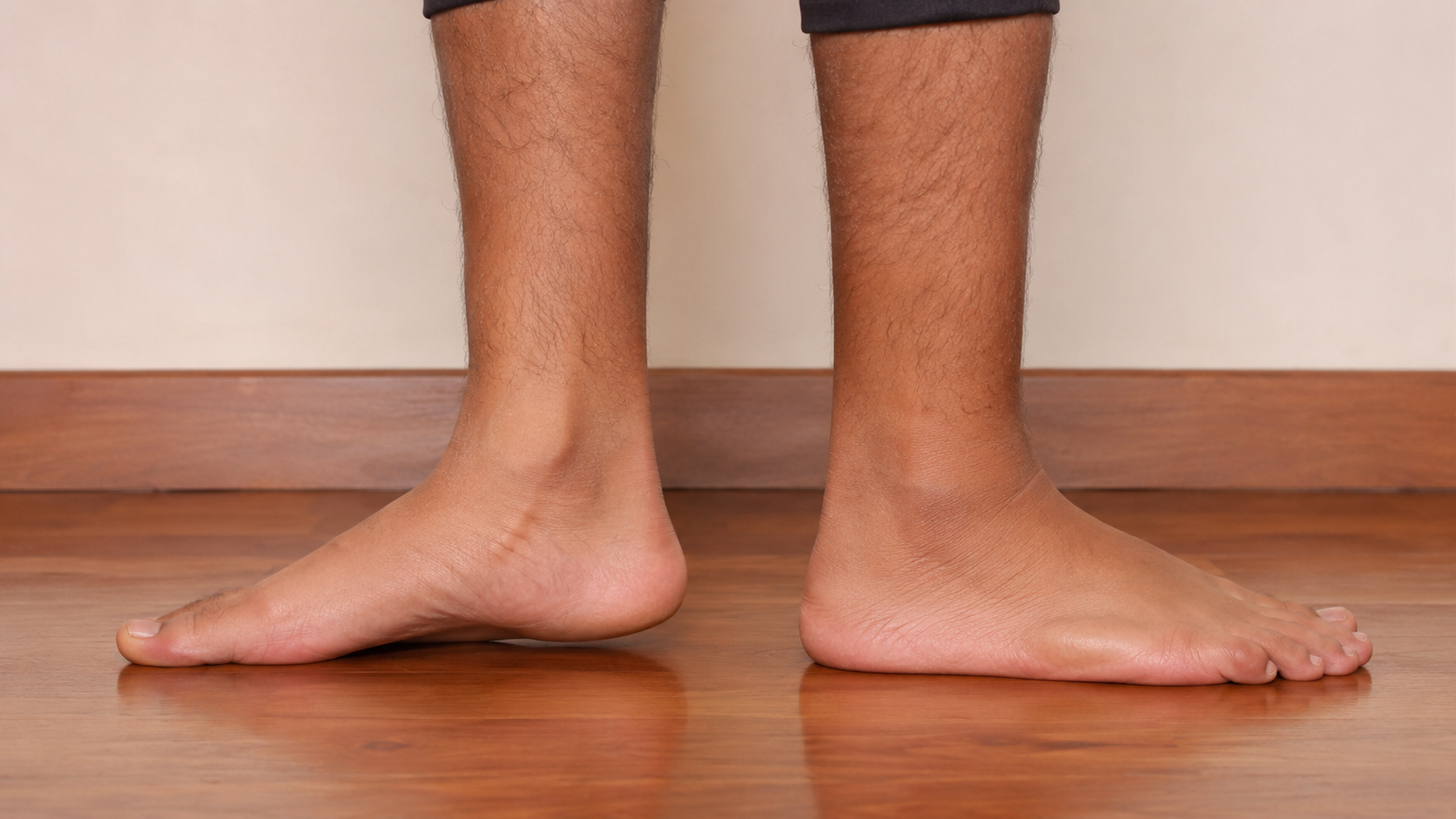
Bare feet standing on the floor, one with a visible low arch, illustrating flat feet.

Overview

'Flat feet' means the inner arch of the foot is low or flattened, so more of the sole touches the ground. It is extremely common — many people have flat feet for life and never have a problem, and children normally have flat feet that develop an arch as they grow.

The useful distinction is between flat feet that are simply your foot shape (flexible, painless — no treatment needed) and flat feet that are causing symptoms or changing over time (which deserve assessment). A particularly important situation is an arch that collapses in adulthood after previously being normal, which can indicate a treatable tendon problem. This page helps you tell these apart.
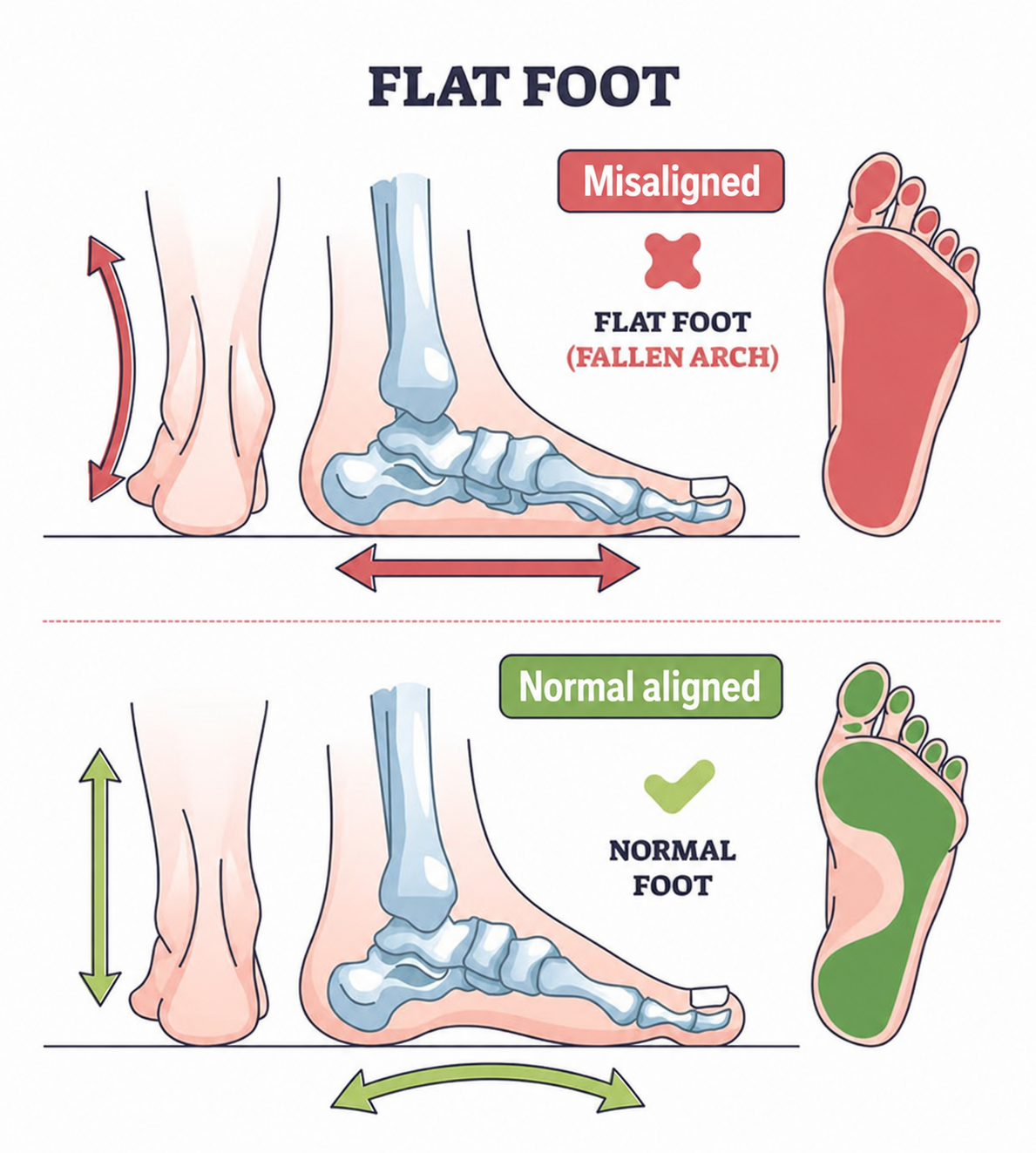
Diagram comparing a normal foot arch with a flattened (fallen) arch and the supporting posterior tibial tendon.

Symptoms & signs

Most flat feet are painless. When flat feet do cause symptoms, these may include:

  • Aching or tiredness in the arch, heel or inner ankle, especially after standing or walking a lot.
  • Pain along the inner ankle or arch (sometimes from the supporting tendon).
  • Swelling along the inside of the ankle.
  • Difficulty with prolonged standing or activity, or shoes wearing unevenly.
  • A visibly rolled-in ankle or the foot pointing outward.
  • In adults, a progressive flattening of a previously normal arch — an important sign.

In children, flat feet are usually painless and normal; pain, stiffness or one-sided flatness are the features that warrant a look.

Causes & risk factors

Flat feet arise for different reasons:

  • Normal variation — many people simply have low arches, often running in families; this is flexible flatfoot and usually harmless.
  • Childhood development — arches typically form during childhood; some remain low into adulthood without problems.
  • Adult-acquired flatfoot — an arch that collapses in adulthood, most often from dysfunction of the posterior tibial tendon (the tendon that supports the arch), which is treatable and better managed early.
  • Ligament laxity — generally flexible joints.
  • Injury or arthritis in the foot, or, less commonly, a rigid flatfoot from bones joined abnormally (tarsal coalition), which tends to cause stiffness.
  • Contributing factors — excess weight, ageing and diabetes can play a part.

Sorting out the cause matters because harmless flat feet need nothing, while a collapsing adult arch benefits from early treatment.

When to see a doctor

See a doctor about flat feet if:

  • They cause pain, swelling or tiredness that limits standing, walking or activity.
  • An arch that was previously normal is flattening in adulthood, or one foot is becoming flatter than the other.
  • There is pain along the inner ankle or the ankle is rolling inward.
  • A child has painful, stiff, or one-sided flat feet (rather than the usual painless, flexible kind).
  • Flat feet are associated with numbness, significant deformity or difficulty walking.

Seek prompt care for a hot, red, swollen or acutely painful foot/ankle, or foot problems with poor circulation or diabetes, which need timely attention.

How it's diagnosed

At VinayakM, flat feet are assessed by:

  1. History — whether they have always been flat or are changing, any pain, activities affected, and relevant conditions such as diabetes.
  2. Examination — the arch on standing and sitting, whether it is flexible or rigid, how you walk, ankle alignment, and specific tests of the posterior tibial tendon (for example, watching the heel as you rise onto your toes).
  3. X-rays — standing (weight-bearing) X-rays where structural assessment or surgical planning is needed.
  4. MRI or ultrasound — if a tendon problem is suspected, to assess it.

The key questions the assessment answers are: is this causing a problem, is it flexible or rigid, and is a treatable tendon issue present?

Treatment options

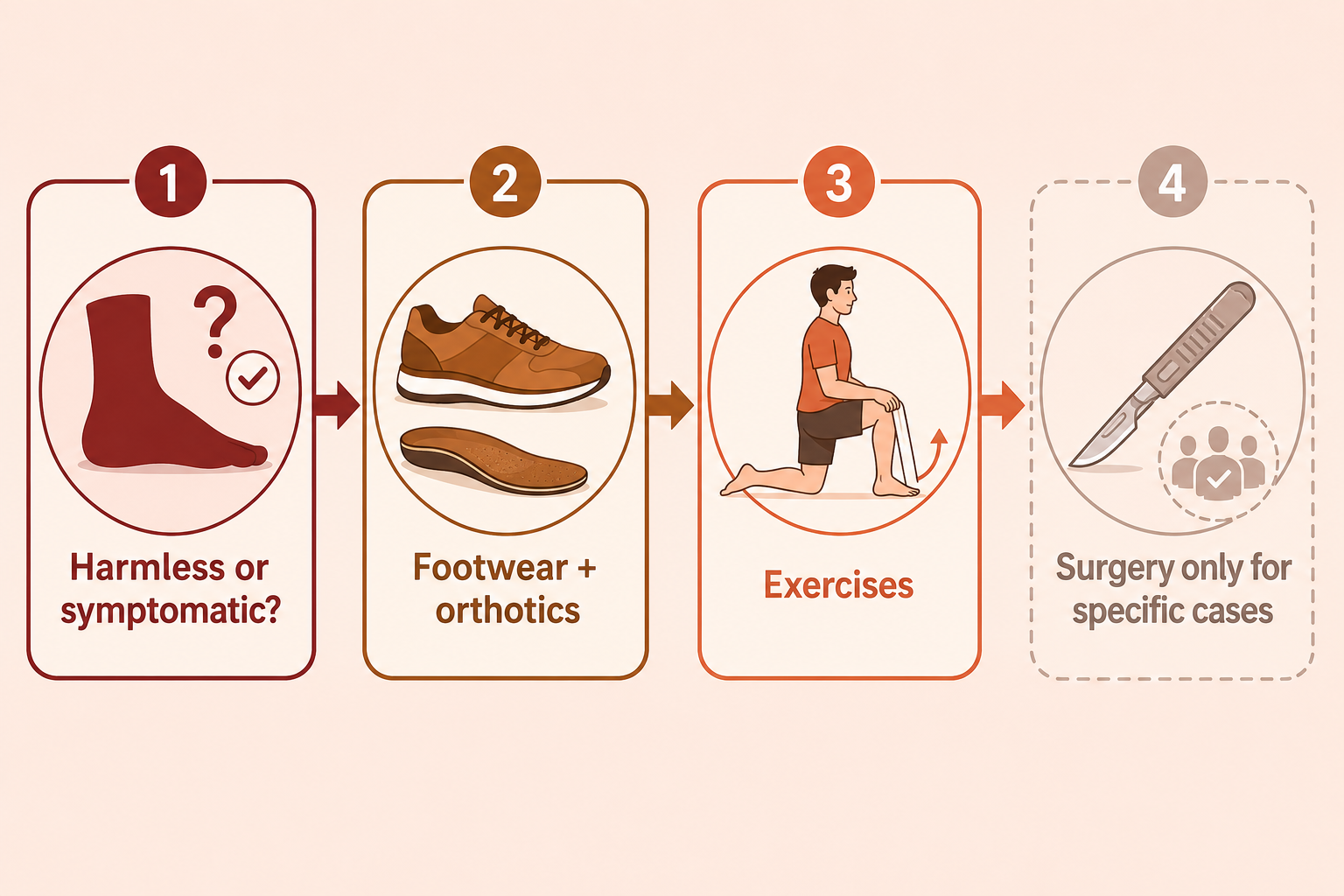
Most flat feet need no treatment. When they cause symptoms, treatment is stepped and usually non-surgical:

1. Footwear and support:

  • Supportive shoes with a firm heel and good arch support.
  • Insoles / orthotics — off-the-shelf or, for specific needs, custom arch supports to reduce strain and improve comfort.

2. Exercises and physiotherapy:

  • Calf stretches and foot and ankle strengthening (including the arch-supporting muscles and posterior tibial tendon) can meaningfully reduce symptoms.

3. Activity and weight:

  • Managing weight reduces load on the arch; modifying aggravating activity during flare-ups helps.

4. Pain relief:

  • Short-term anti-inflammatory measures for painful episodes, on medical advice.

5. Treating a collapsing adult arch early:

  • Posterior tibial tendon dysfunction responds best to early treatment — supportive orthotics, sometimes a period of immobilisation, and physiotherapy — to prevent progression.

6. Surgery:

  • Reserved for specific situations — significant pain or deformity not helped by the above, progressive adult-acquired flatfoot, or rigid painful flatfoot. Procedures are chosen to the individual foot.

The great majority of people are managed comfortably without surgery.

How VinayakM helps

At VinayakM in Greater Kailash-1, flat feet are assessed by Dr Udit Vinayak (trauma, sports medicine and joint replacement surgeon), with the first job being to reassure the many whose flat feet are harmless and to identify the few who need care:

  • A clear judgement on whether your flat feet are the harmless flexible kind or are causing or likely to cause problems.
  • Early identification of adult-acquired (tendon-related) flatfoot, where prompt treatment prevents progression.
  • A non-surgical plan — footwear advice, orthotics, and a physiotherapy programme of stretching and strengthening — for symptomatic feet.
  • Weight support via our dietician where relevant.
  • Surgical opinion only for the specific painful or progressive cases that need it.

You will not be given insoles or surgery for flat feet that do not need them.
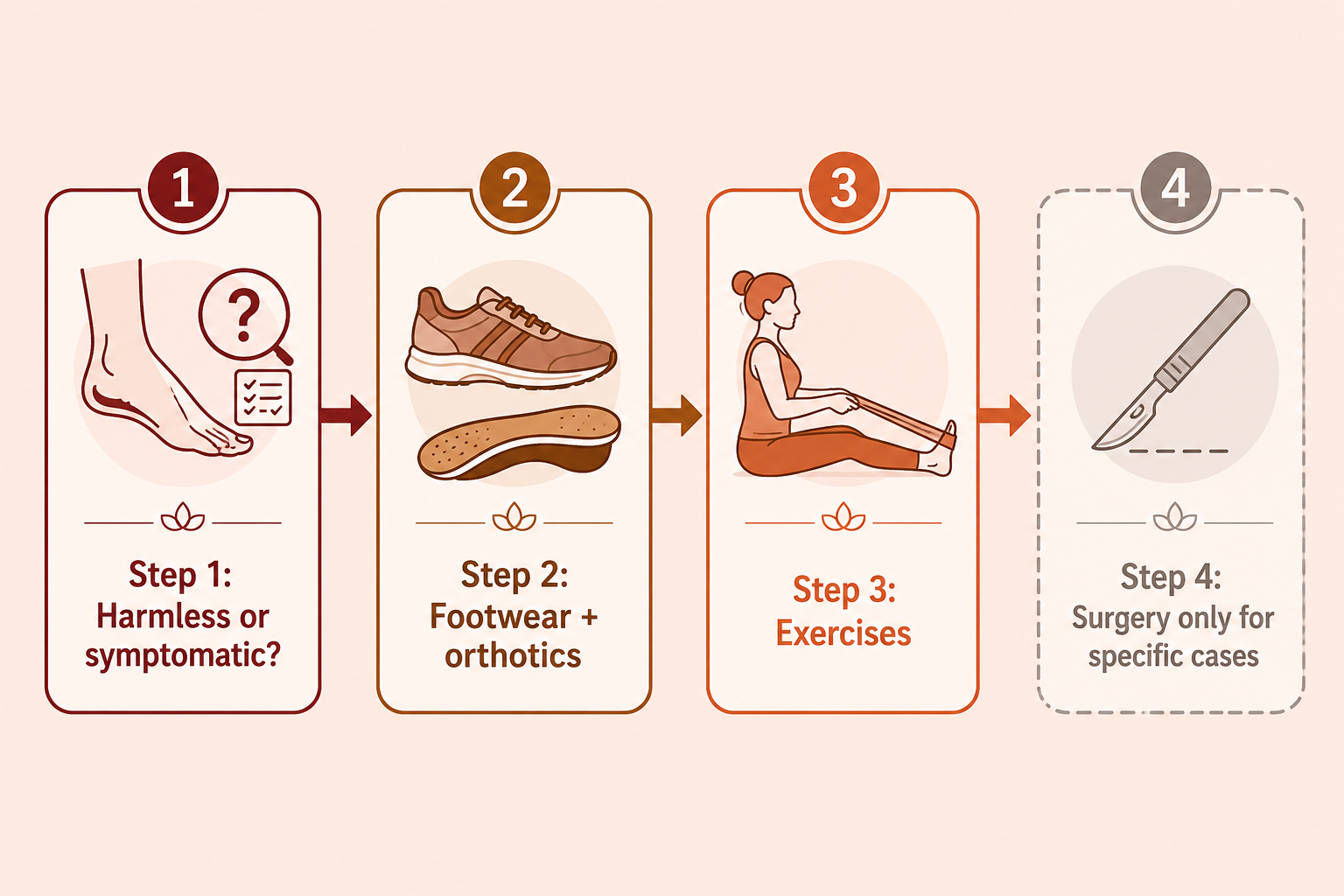
Flat feet pathway: decide harmless versus symptomatic, supportive footwear and orthotics, exercises, and surgery only for specific cases.

Prevention & self-care

You cannot change your basic foot shape, but you can reduce the chance of flat feet causing trouble:
  • Wear supportive, well-fitting footwear, especially for long standing or walking; avoid long spells in unsupportive flat shoes if your feet ache.
  • Keep the calves and foot muscles strong and flexible — calf stretches and foot strengthening protect the arch.
  • Maintain a healthy weight to limit load on the arch.
  • Build up activity gradually and address foot or ankle aches early rather than pushing through.
  • Act early on a changing arch — an adult arch that is flattening is best assessed promptly, as early treatment of tendon problems works better.
  • Look after your feet if you have diabetes — regular checks and good footwear.
Illustration of foot and calf exercises for flat feet: calf stretch, heel raises and arch strengthening.

Frequently asked questions

Are flat feet a problem that needs treatment?

Usually not. Flat feet are very common and in most people are painless and need no treatment. They only need attention when they cause pain, tiredness or difficulty with activity, or when an arch that was previously normal starts to collapse in adulthood. Painless, lifelong flat feet generally require nothing.

Do children with flat feet need insoles or treatment?

Most do not. Children normally have flat feet that develop an arch as they grow, and painless flexible flat feet in children usually need no treatment or insoles. Assessment is worthwhile if a child has foot pain, stiffness, or flatness affecting one side more than the other.

Can flat feet cause knee, hip or back pain?

In some people, the altered foot and ankle alignment from flat feet can contribute to knee, hip or back discomfort, though the link is not automatic and many people with flat feet have no such problems. Where there is a connection, supportive footwear, orthotics and strengthening often help, as part of assessing the whole limb.

Do I need custom orthotics for flat feet?

Not always. For many people with symptomatic flat feet, supportive shoes and good-quality off-the-shelf insoles are enough, alongside calf and foot exercises. Custom orthotics are useful for specific needs or particular foot shapes. An assessment can advise what is actually likely to help you rather than defaulting to custom devices.

When do flat feet need surgery?

Rarely. Surgery is reserved for specific situations — significant pain or deformity that has not responded to footwear, orthotics and physiotherapy, progressive adult-acquired flatfoot, or a rigid painful flatfoot. The great majority of people with flat feet are managed comfortably without any operation.

Related reading

References

  1. American Academy of Orthopaedic Surgeons — OrthoInfo. Flexible flatfoot in adults / children. — https://orthoinfo.aaos.org/en/diseases--conditions/adult-acquired-flatfoot/
  2. National Health Service (NHS). Flat feet. — https://www.nhs.uk/conditions/flat-feet/
  3. American Academy of Orthopaedic Surgeons — OrthoInfo. Posterior tibial tendon dysfunction. — https://orthoinfo.aaos.org/en/diseases--conditions/posterior-tibial-tendon-dysfunction/
This page is for general information and education only. It is not a substitute for a consultation, diagnosis or treatment from a qualified clinician. If you have any of the red-flag symptoms above, seek medical care promptly.
{"@context":"https://schema.org","@graph":[{"@type":["MedicalClinic","LocalBusiness"],"@id":"https://www.vinayakm.in/#clinic","name":"VinayakM","url":"https://www.vinayakm.in","logo":"https://cdn.prod.website-files.com/6908cd2bb6a88638d8c0e611/6a494a210e7a3f8e0c33192a_vinayakm-name-logo.png","telephone":"+91 92171 75397","email":"info@vinayakm.in","address":{"@type":"PostalAddress","streetAddress":"3rd floor, B-23, Block B, N Block Market","addressLocality":"Greater Kailash-1, New Delhi","addressRegion":"Delhi","postalCode":"110048","addressCountry":"IN"},"geo":{"@type":"GeoCoordinates","latitude":28.556354,"longitude":77.2323718},"openingHours":["Mo-Tu 09:00-20:00","Th-Su 09:00-20:00"],"founder":{"@type":"Person","name":"Mani Sharma"},"sameAs":["https://maps.app.goo.gl/jPVPXKfH8qAUUDeo8"]},{"@type":"MedicalWebPage","@id":"https://www.vinayakm.in/orthopaedics/flat-foot#webpage","url":"https://www.vinayakm.in/orthopaedics/flat-foot","name":"Flat Feet (Fallen Arches): Causes & Treatment | VinayakM","description":"Flat feet are common and often painless. Learn when flat feet matter, what causes fallen arches, and how symptoms are treated — from an orthopaedic team in GK-1.","inLanguage":"en-IN","about":{"@type":"MedicalCondition","name":"Flat feet","alternateName":["Fallen arches","Pes planus","Flatfoot"]},"author":{"@type":"Physician","name":"Dr Udit Vinayak","jobTitle":"Trauma, Sports Medicine & Joint Replacement Surgeon","url":"https://www.vinayakm.in/team/dr-udit-vinayak","medicalSpecialty":"Orthopedic"},"reviewedBy":{"@type":"Physician","name":"Dr Udit Vinayak","jobTitle":"Trauma, Sports Medicine & Joint Replacement Surgeon","url":"https://www.vinayakm.in/team/dr-udit-vinayak","medicalSpecialty":"Orthopedic"},"lastReviewed":"2026-07-05","dateModified":"2026-07-05","publisher":{"@id":"https://www.vinayakm.in/#clinic"},"medicalAudience":{"@type":"MedicalAudience","audienceType":"Patient"}},{"@type":"FAQPage","@id":"https://www.vinayakm.in/orthopaedics/flat-foot#faq","mainEntity":[{"@type":"Question","name":"Are flat feet a problem that needs treatment?","acceptedAnswer":{"@type":"Answer","text":"Usually not. Flat feet are very common and in most people are painless and need no treatment. They only need attention when they cause pain, tiredness or difficulty with activity, or when an arch that was previously normal starts to collapse in adulthood. Painless, lifelong flat feet generally require nothing."}},{"@type":"Question","name":"Do children with flat feet need insoles or treatment?","acceptedAnswer":{"@type":"Answer","text":"Most do not. Children normally have flat feet that develop an arch as they grow, and painless flexible flat feet in children usually need no treatment or insoles. Assessment is worthwhile if a child has foot pain, stiffness, or flatness affecting one side more than the other."}},{"@type":"Question","name":"Can flat feet cause knee, hip or back pain?","acceptedAnswer":{"@type":"Answer","text":"In some people, the altered foot and ankle alignment from flat feet can contribute to knee, hip or back discomfort, though the link is not automatic and many people with flat feet have no such problems. Where there is a connection, supportive footwear, orthotics and strengthening often help, as part of assessing the whole limb."}},{"@type":"Question","name":"Do I need custom orthotics for flat feet?","acceptedAnswer":{"@type":"Answer","text":"Not always. For many people with symptomatic flat feet, supportive shoes and good-quality off-the-shelf insoles are enough, alongside calf and foot exercises. Custom orthotics are useful for specific needs or particular foot shapes. An assessment can advise what is actually likely to help you rather than defaulting to custom devices."}},{"@type":"Question","name":"When do flat feet need surgery?","acceptedAnswer":{"@type":"Answer","text":"Rarely. Surgery is reserved for specific situations — significant pain or deformity that has not responded to footwear, orthotics and physiotherapy, progressive adult-acquired flatfoot, or a rigid painful flatfoot. The great majority of people with flat feet are managed comfortably without any operation."}}]},{"@type":"BreadcrumbList","@id":"https://www.vinayakm.in/orthopaedics/flat-foot#breadcrumbs","itemListElement":[{"@type":"ListItem","position":1,"name":"Home","item":"https://www.vinayakm.in"},{"@type":"ListItem","position":2,"name":"Orthopaedics","item":"https://www.vinayakm.in/orthopaedics"},{"@type":"ListItem","position":3,"name":"Flat Feet (Fallen Arches): Causes, Symptoms & Treatment","item":"https://www.vinayakm.in/orthopaedics/flat-foot"}]}]}
WhatsApp