 GK-1, South Delhi
“Knowledgeable, professional, and helped relieve my pain.”
“Fully satisfied with the physio’s work.”
“Dedicated and trustworthy staff.”
Diwali Month: choose a complimentary nutrition or counselling consultation with your first visit.
Pain going down steps, stiffness after sitting, a knee that swells after a walk. Or a knee that is still weak months after an operation.
Pain after long hours at a desk or in the car, a pull when you bend or lift, or pain that goes down the leg.
A neck that hurts when you turn, headaches that start at the back of the head, or a shoulder that will not lift all the way.
Knee pain, back pain, neck and shoulder pain, and recovery after an operation: Dr Divyansh Dubey, VinayakM’s physiotherapist, examines you first and treats the cause, not only the pain. Every session is hands-on and guided, never left to a machine. The work usually has four parts.
How the joint moves, what makes it worse, and what the pain is coming from.
Hands-on treatment, and pain-relief methods where they help, so you can move again.
A few exercises that build strength around the joint, taught in the clinic and done at home.
The plan is reviewed as you improve, until you no longer need to come.
Treatment is at the clinic, in the physiotherapy room. If your recovery needs a surgeon’s opinion, an orthopaedic assessment is available at the clinic by appointment with our visiting orthopaedic surgeon, and the findings come straight back into your plan.
Physiotherapy does not prescribe medicines. Sudden severe pain after a fall, numbness around the hips or groin, or new trouble with the bladder or bowel need a doctor the same day, not a callback.
You can stop at any step. A callback request does not commit you to anything.
The clinic team calls you to explain physiotherapy and the available appointments. Nothing is booked until you confirm.
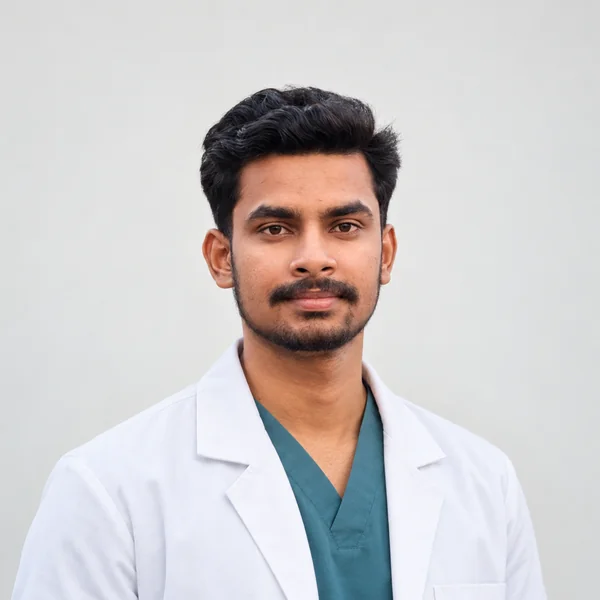
Physiotherapist · BPTh
Dr Divyansh Dubey is VinayakM’s physiotherapist, with a Bachelor’s degree in physiotherapy. He carries out both the examination and the treatment, from the first visit to the day you no longer need to come.
The work follows the clinic’s approach: relief first, with hands-on treatment, then a graded exercise programme that is taught, checked and adjusted as you go.
A member of the office team calls the number you gave, 9 am to 8 pm, except Wednesdays. They explain how physiotherapy works here and the available appointments, and answer your questions. A callback request is an enquiry: nothing is booked until you confirm. By requesting a callback, you agree that VinayakM may call you about this enquiry (privacy policy).
Dr Divyansh Dubey asks about your pain, examines the joint or the back, and watches how you move. You get a plain explanation of what is causing the pain, treatment on the same day where it is safe to start, and two or three exercises to take home.
Usually not. Most knee, back and neck pain can be assessed by examination. If a scan or a doctor’s opinion would change the plan, we say so and help you arrange it.
It depends on the problem and how long you have had it. Many people feel a difference within the first few sessions. The plan is agreed with you at the start and reviewed as you improve.
Yes. Rehabilitation after joint replacement and other orthopaedic operations is a large part of the work here, following your surgeon’s instructions.
If your problem needs a surgeon’s opinion, an orthopaedic assessment is available at the clinic by appointment with our visiting orthopaedic surgeon, and the findings come straight back into your physiotherapy plan.
No. Treatment is at the clinic in Greater Kailash-1, where the equipment and the space for exercise are.
Yes. Request a callback and the team will answer your questions and, if they wish, speak with them before anything is booked.
Loose, comfortable clothes you can move in. Bring any reports, X-rays or scans you already have, and a list of your medicines.
VinayakM is on the third floor, B-23, N Block Market, Greater Kailash-1, New Delhi 110048, at the exit of N Block Market, facing the MCD parking. There is a lift. It is open 9 am to 8 pm, closed on Wednesdays.
Leave your name and mobile number and our office team will call you. Nothing is booked until you confirm.
VinayakM
3rd floor, B-23, N Block Market, Greater Kailash-1, New Delhi 110048
Open 9 am to 8 pm, closed on Wednesdays
+91 92171 75397
Most knee, back and neck pain settles faster with the right movement than with rest. It is worth being examined when:
See a doctor the same day, not a physiotherapist, if the pain follows a fall and you cannot stand on the leg, if you have numbness around the hips or groin, new trouble with the bladder or bowel, or fever with a hot, swollen joint.
This page is for general information only. It is not a substitute for examination or treatment by a qualified professional. If pain follows a serious injury, or comes with numbness, weakness or loss of bladder or bowel control, go to a hospital emergency department.