
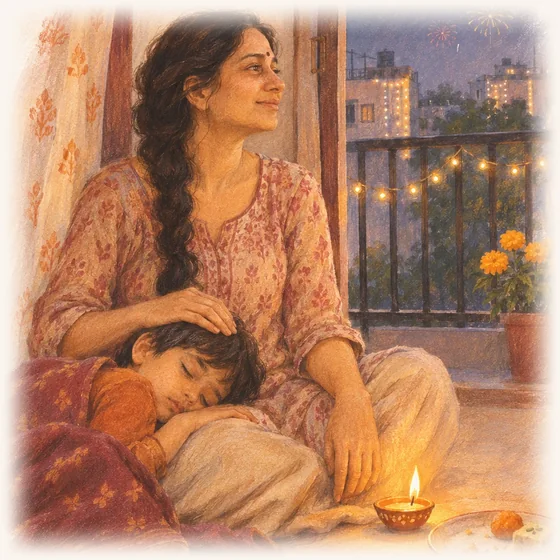
Every decision and every bad night is yours. There is rarely a moment to put it down.
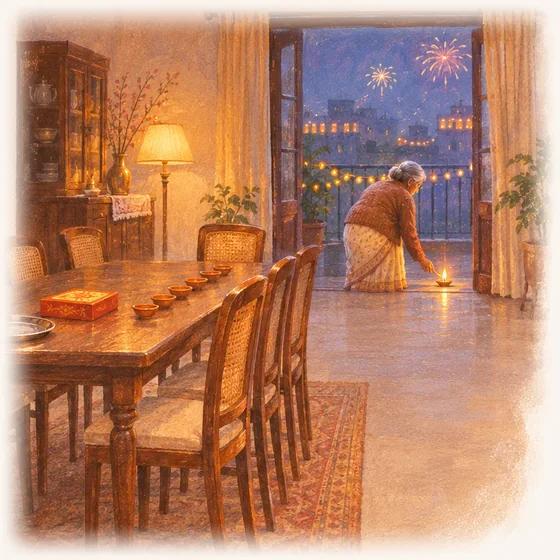
The house is quieter than it used to be. You are proud of them and you miss them, and both are true.
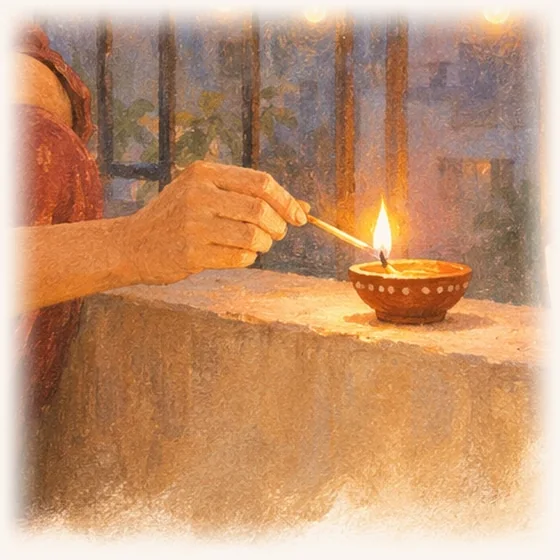
Some days are fine. Then a festival arrives, with its family questions and its empty chair.
Loneliness is not the same as being alone. You can feel it in a full house or at a family dinner, and festivals often make it sharper. Mani Sharma, VinayakM’s counsellor, works one to one with adults who want to talk properly, without being judged or hurried. The sessions usually cover four areas.
What has changed, what you are carrying, and what you have not been able to say to anyone.
Which hours are hardest, and how sleep, food and routine are holding up.
Who is around you, who you miss, and what would feel possible, at your own pace.
Festivals, birthdays and anniversaries, and how to get through them your way.
Sessions are at least 60 minutes, in a private room. What you share stays between you and your counsellor; the only exception is a situation where someone’s safety is at serious risk.
Counselling is talking-based support. It does not diagnose conditions or prescribe medicines. If what you are feeling is something a psychiatrist or clinical psychologist should look at, such as a long low mood, we say so and help you arrange it.
You can stop at any step. A callback request does not commit you to anything.
The clinic team calls you to explain counselling and the available appointments. Nothing is booked until you confirm.

Counselling and emotional care · B.A. Psychology
Mani provides one-to-one counselling at VinayakM. Sessions begin with listening: to what is happening, to how it shows up in your days, and to what you would like to be different.
From there, Mani agrees with you what to work on and how often to meet. If you need a psychiatrist or clinical psychologist, the clinic helps you arrange it.
A member of the office team calls the number you gave, 9 am to 8 pm, except Wednesdays and Diwali (8 November). They explain how counselling works and the available appointments, and answer your questions. A callback request is an enquiry: nothing is booked until you confirm, and the call is not a counselling session. By requesting a callback, you agree that VinayakM may call you about this enquiry (privacy policy).
The team asks for you by name and says they are calling from VinayakM. They do not mention counselling to anyone else who answers the phone.
Yes. You do not need a diagnosis, or even a name for what you are feeling. Many people come simply because there is nobody they can say these things to without worrying them.
Festivals bring memories, comparisons and family questions, and everyone around you seems to be celebrating. If you are living alone, raising children alone or missing someone, the contrast can feel sharper for a few days. Feeling this way is common, and it does not mean something is wrong with you.
Yes. What you share stays with your counsellor. The only exception is a situation where someone’s safety is at serious risk, and even then we would talk to you first wherever possible.
Each session is at least 60 minutes, so there is time to talk properly. The number varies: some people find a few sessions enough, others prefer longer support. We agree a plan at the start and review it together.
Yes. You can request a callback to ask questions on their behalf. Counselling works best when the person chooses to come, so the team will want to speak with them before anything is booked. What they discuss is not shared with the family unless they want it to be.
No. Counselling is talking-based support and does not involve diagnosis or medication. If a psychiatrist or clinical psychologist would help, we will tell you and help you arrange it.
Please do not wait for a callback. For urgent emotional support at any hour, India’s national mental health helpline, Tele-MANAS, is on 14416. If you or someone else is in immediate danger, call 112. Counselling is not an emergency service.
VinayakM is on the third floor, B-23, N Block Market, Greater Kailash-1, New Delhi 110048. It is open 9 am to 8 pm, closed on Wednesdays and on Diwali (8 November).
Leave your name and mobile number and our office team will call you. Nothing is booked until you confirm.
VinayakM
3rd floor, B-23, N Block Market, Greater Kailash-1, New Delhi 110048
Open 9 am to 8 pm, closed on Wednesdays and on Diwali (8 November)
+91 92171 75397
Loneliness is the gap between the connection you have and the connection you would like. It can follow a change such as a separation, a bereavement, children moving away or retirement, and it can also arrive with no clear reason. Most people feel it at some point.
If you have felt low for more than two weeks, or things you try yourself are not helping, it is worth talking to a professional.
This page is for general information only. It is not a substitute for assessment or treatment by a qualified professional. Counselling is not an emergency service: if you or someone else is in immediate danger, call 112; for urgent emotional support at any hour, call Tele-MANAS on 14416.